01 · Movement
Expression Lines
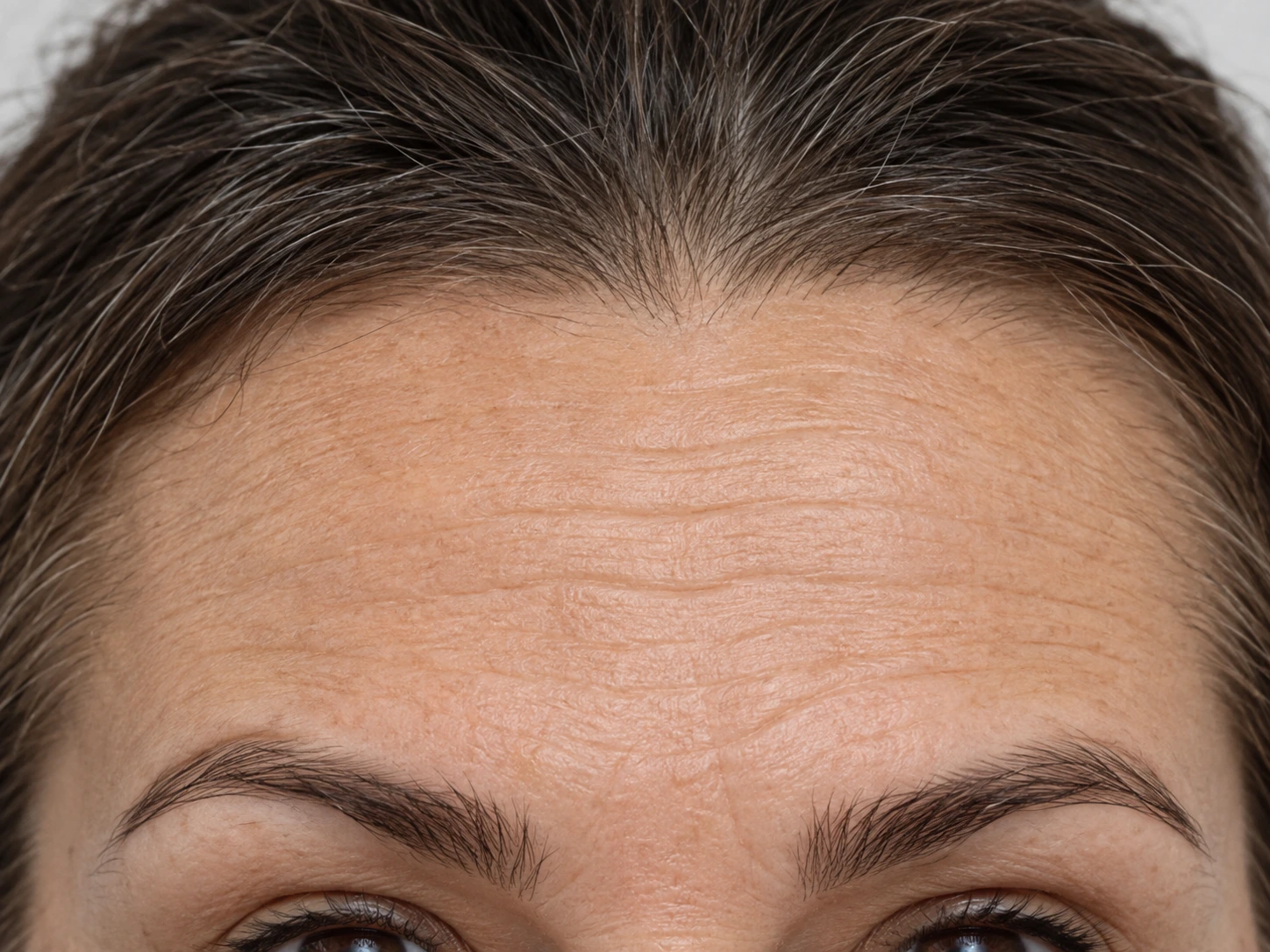
Appear when you smile, frown or raise your eyebrows.
Lines are a natural part of ageing. But not every wrinkle happens for the same reason.
Understanding what creates the line helps determine which wrinkle treatment may be appropriate.
Movement, sun exposure, skin quality, collagen loss and facial structure can all play a part.
Young skin usually springs back easily after facial movement.
Over time, collagen, elastin, hydration and facial volume change. Lines that once disappeared may gradually remain visible.
Some wrinkles are mainly caused by repeated movement. Others become more visible because of changes in skin texture, firmness or the structures beneath the skin.
Wrinkles do not automatically mean your skin is unhealthy. Treatment is a personal choice.
Look at when the line appears and what happens when your face relaxes.
Appear when you smile, frown or raise your eyebrows.
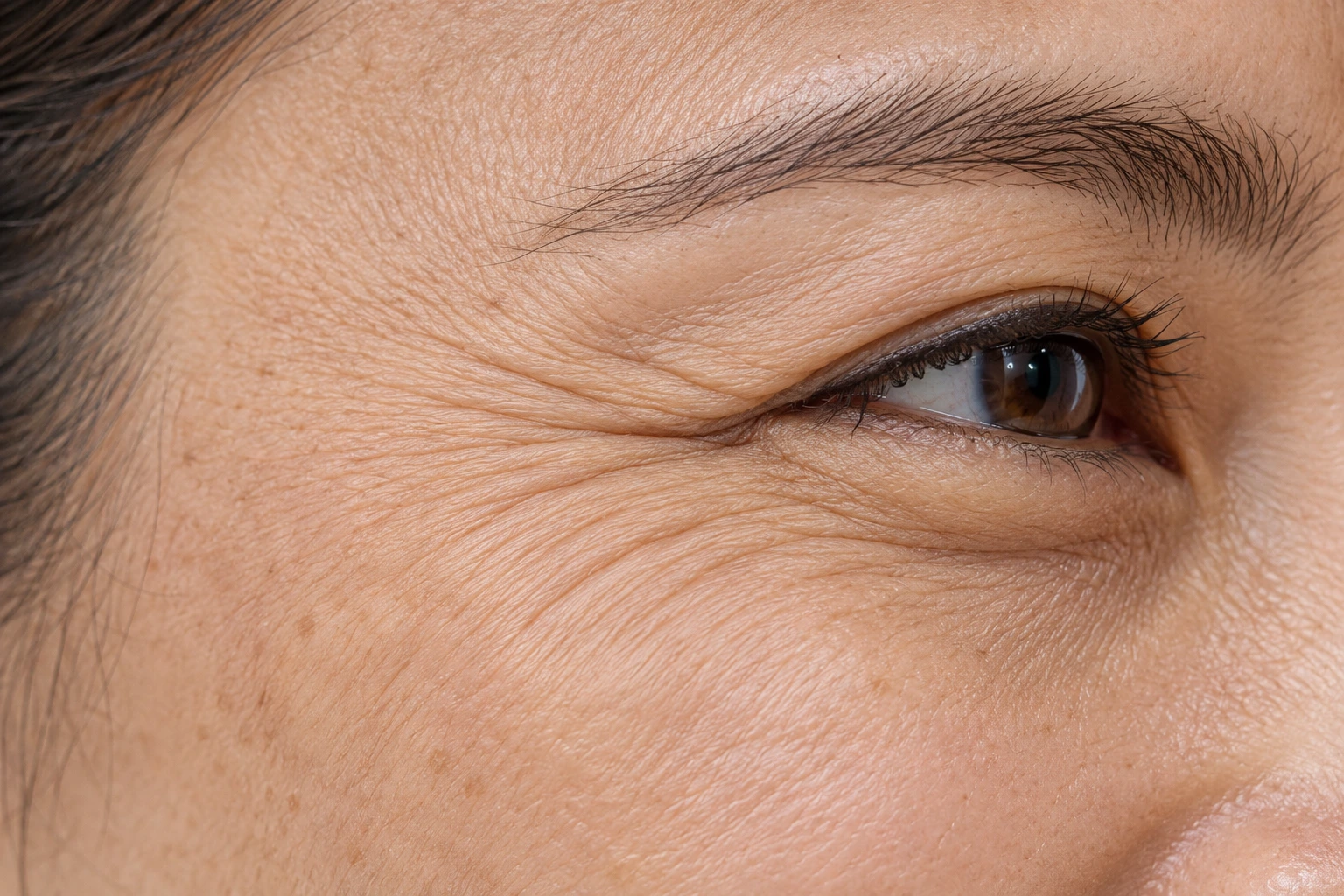
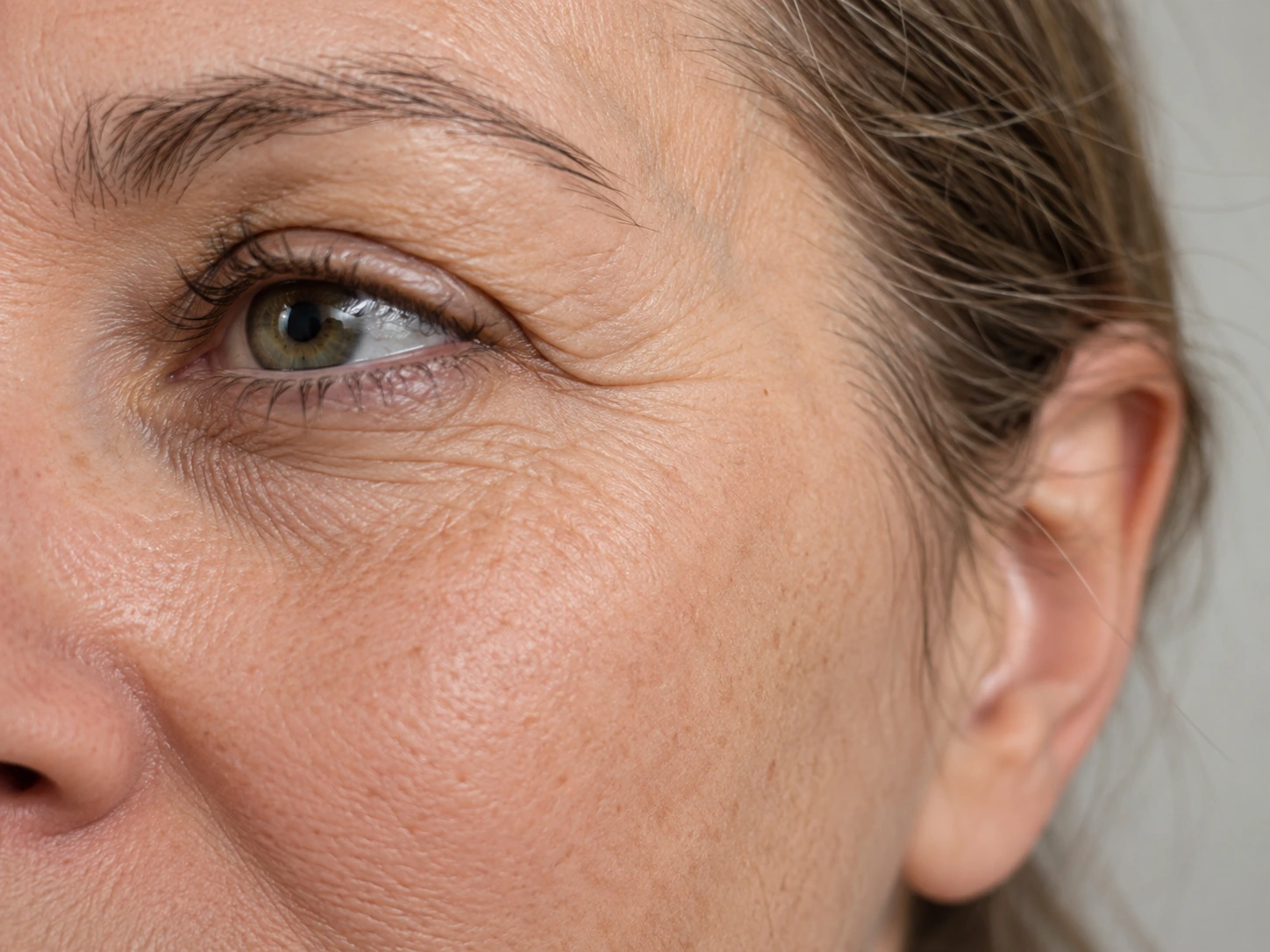
Fine lines spreading from the outer corners of the eyes.
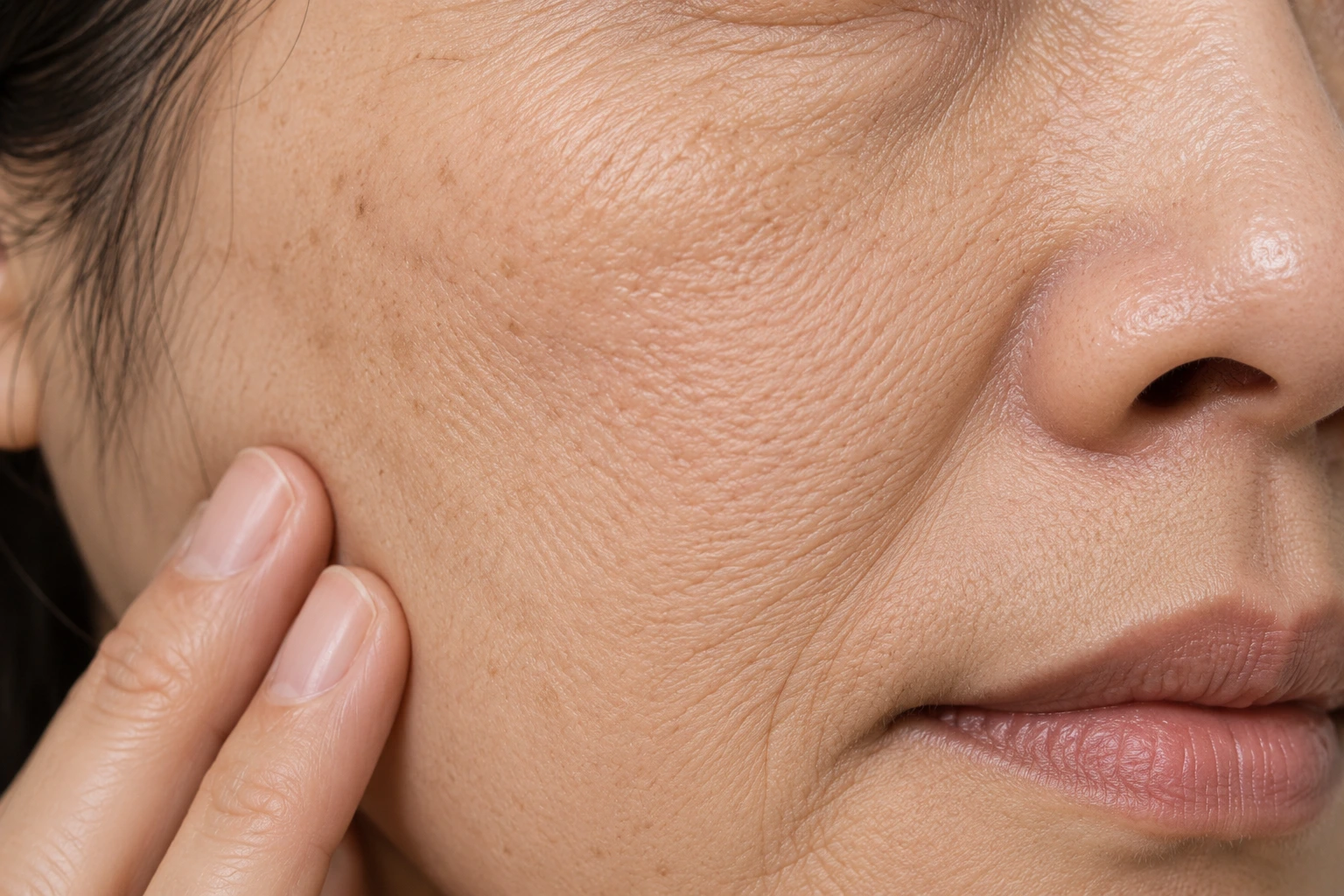
Superficial lines often associated with ageing, dryness and cumulative sun exposure.
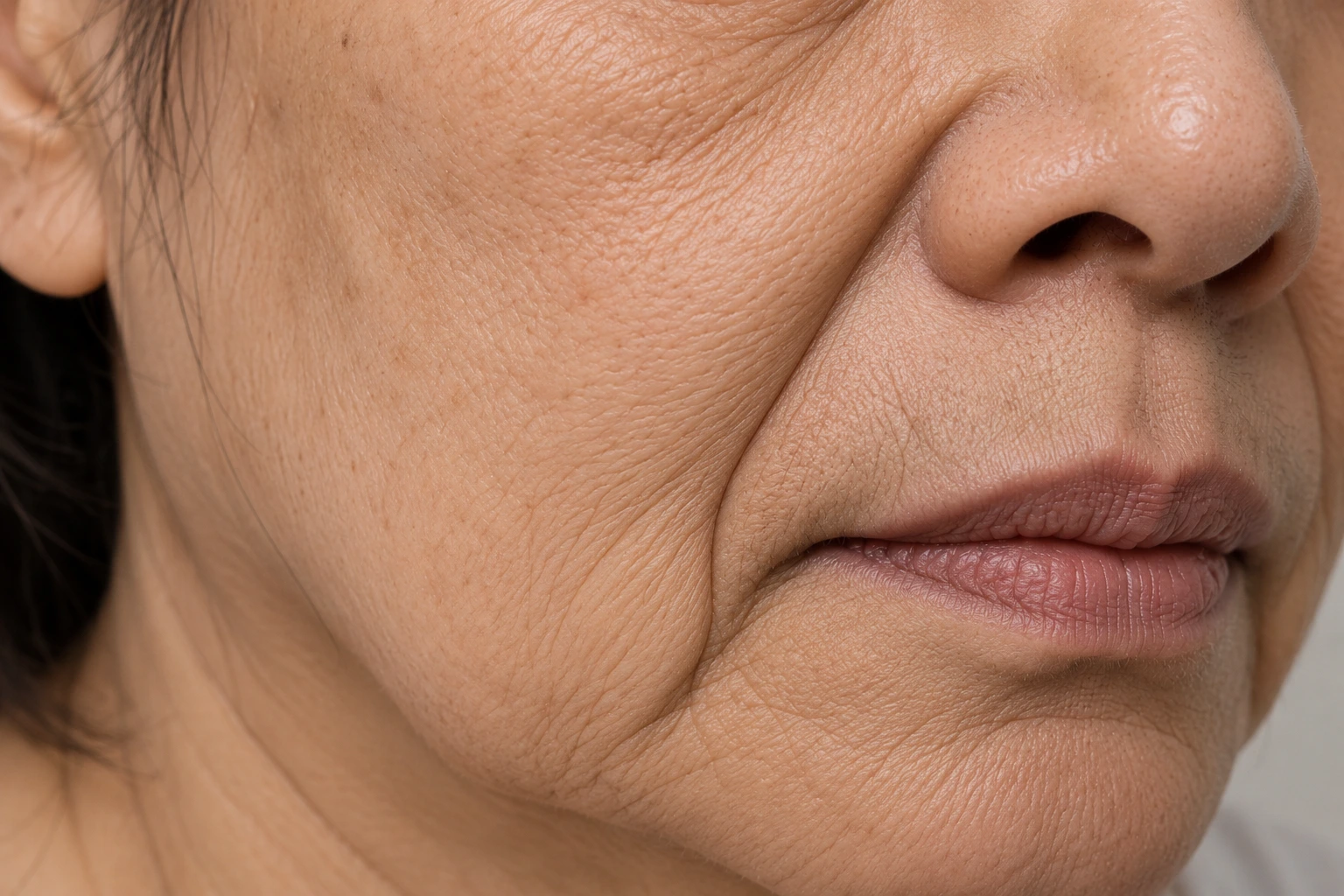
More established creases influenced by volume, skin and structural changes.

Wrinkles usually develop through a combination of factors.
Smiling, squinting and frowning repeatedly fold the skin.
Skin gradually becomes less firm and less able to rebound.
Cumulative UV exposure contributes to premature skin ageing.
Changes beneath the skin may make folds and shadows more noticeable.
Dehydrated or rough skin may make superficial fine lines appear more obvious.
Want to protect your skin earlier? Read our guide on how to prevent premature skin ageing .
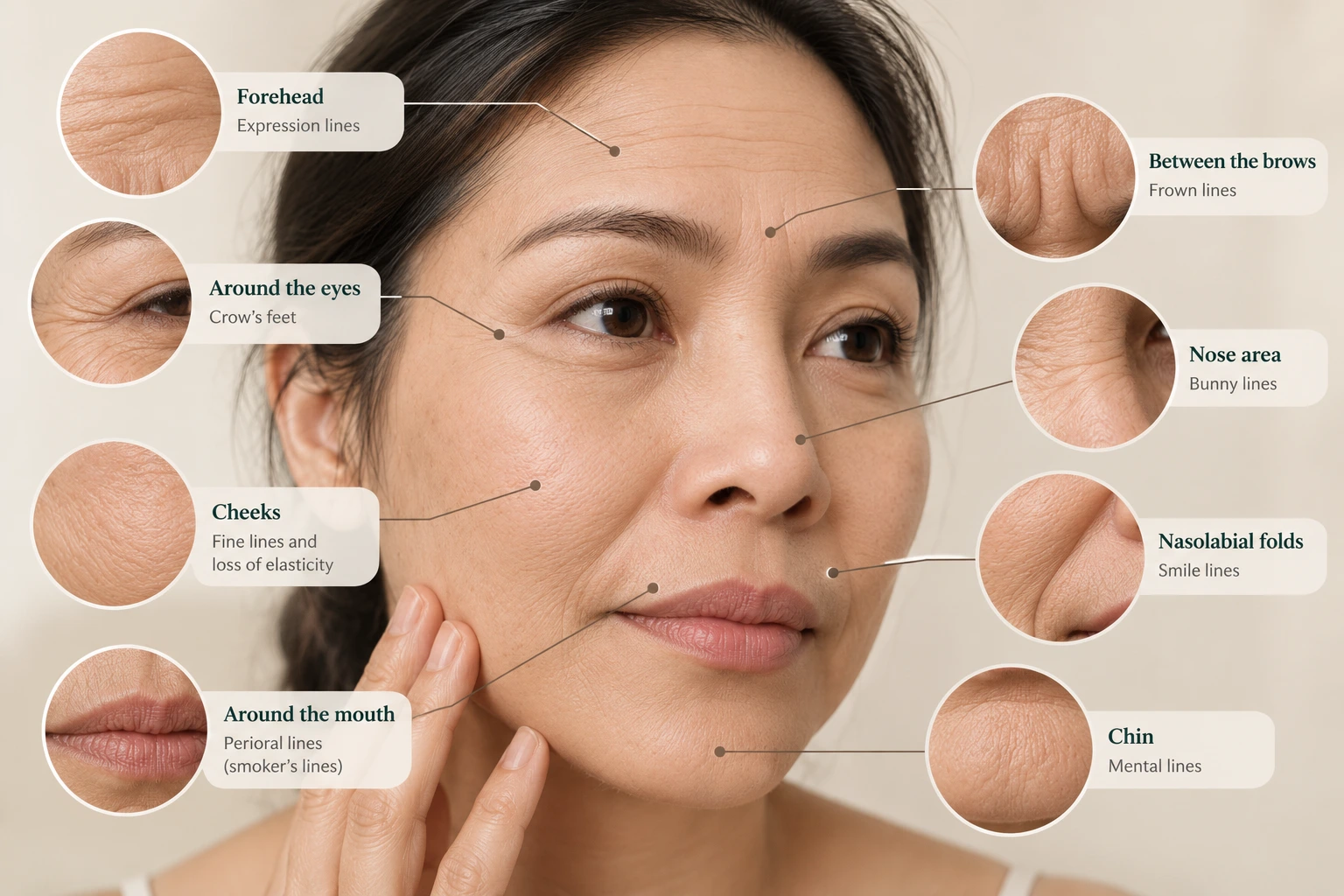
Some areas are affected mainly by movement. Others change as facial structure and skin quality evolve.
The most suitable wrinkle treatment depends on whether the concern comes mainly from movement, skin quality, laxity or structural change. A doctor may recommend one approach or a combination.
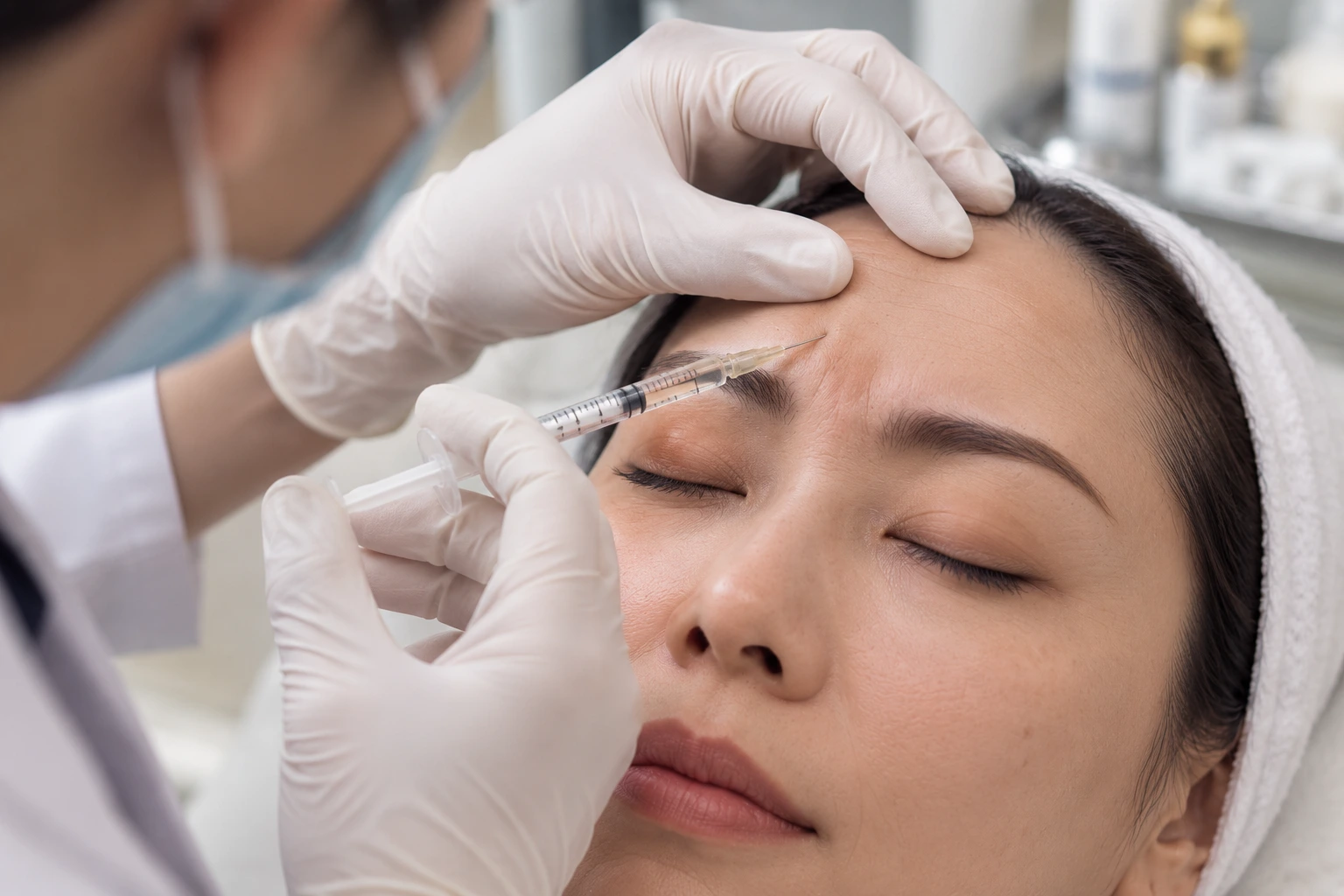
May be considered for selected expression lines caused predominantly by repeated muscle movement.
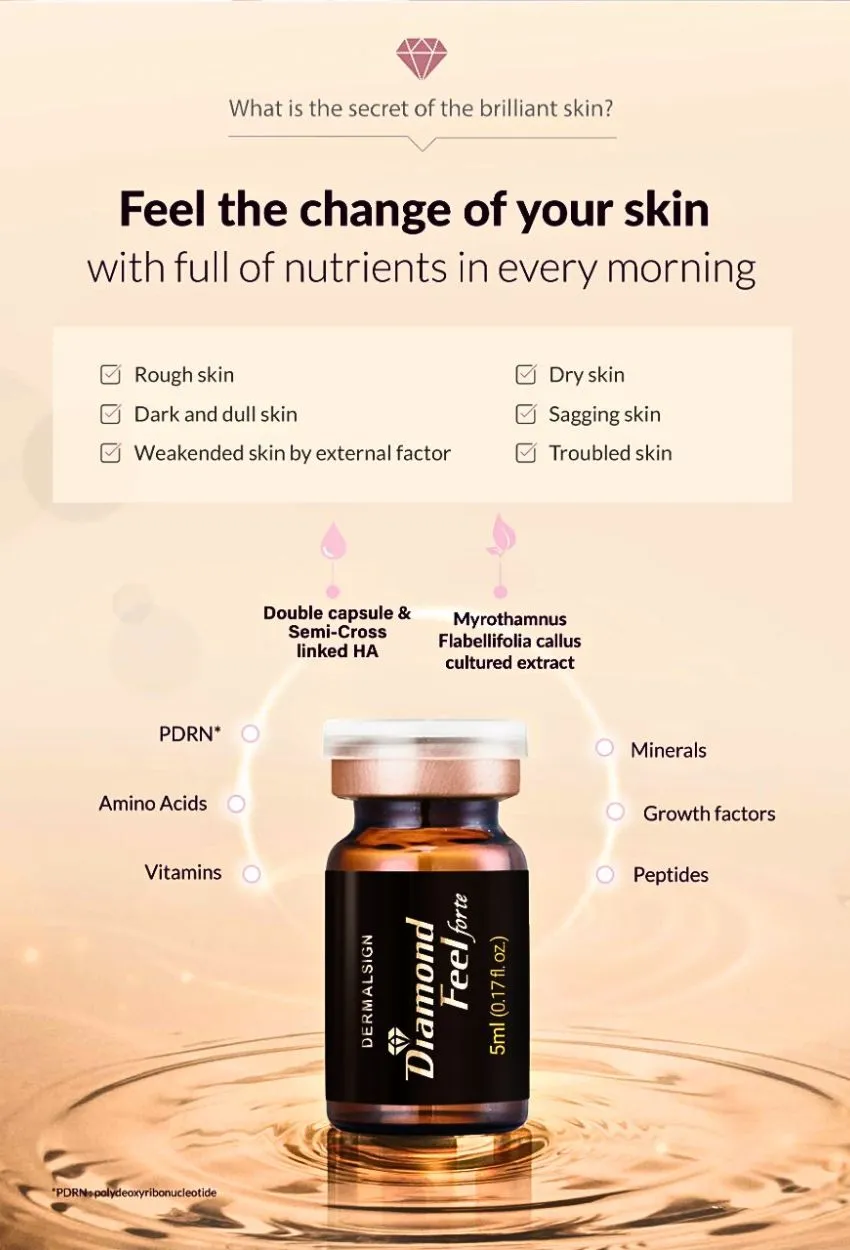
Selected injectable treatments may support hydration and overall skin quality where superficial fine lines are a concern.
Explore our Skin Booster Guide →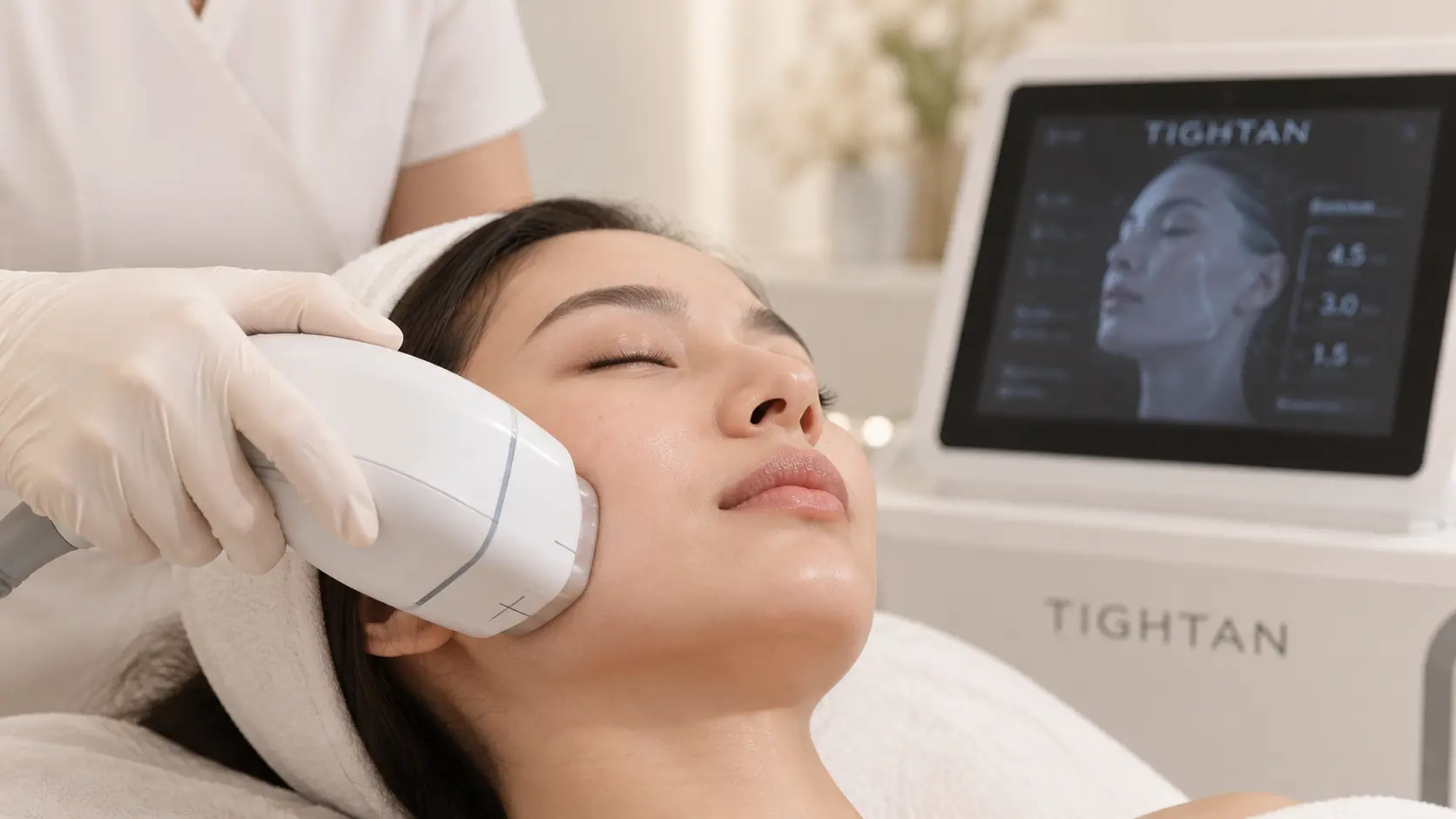
May be considered where reduced firmness or facial definition contributes to an ageing appearance.
Learn about Tightan HIFU →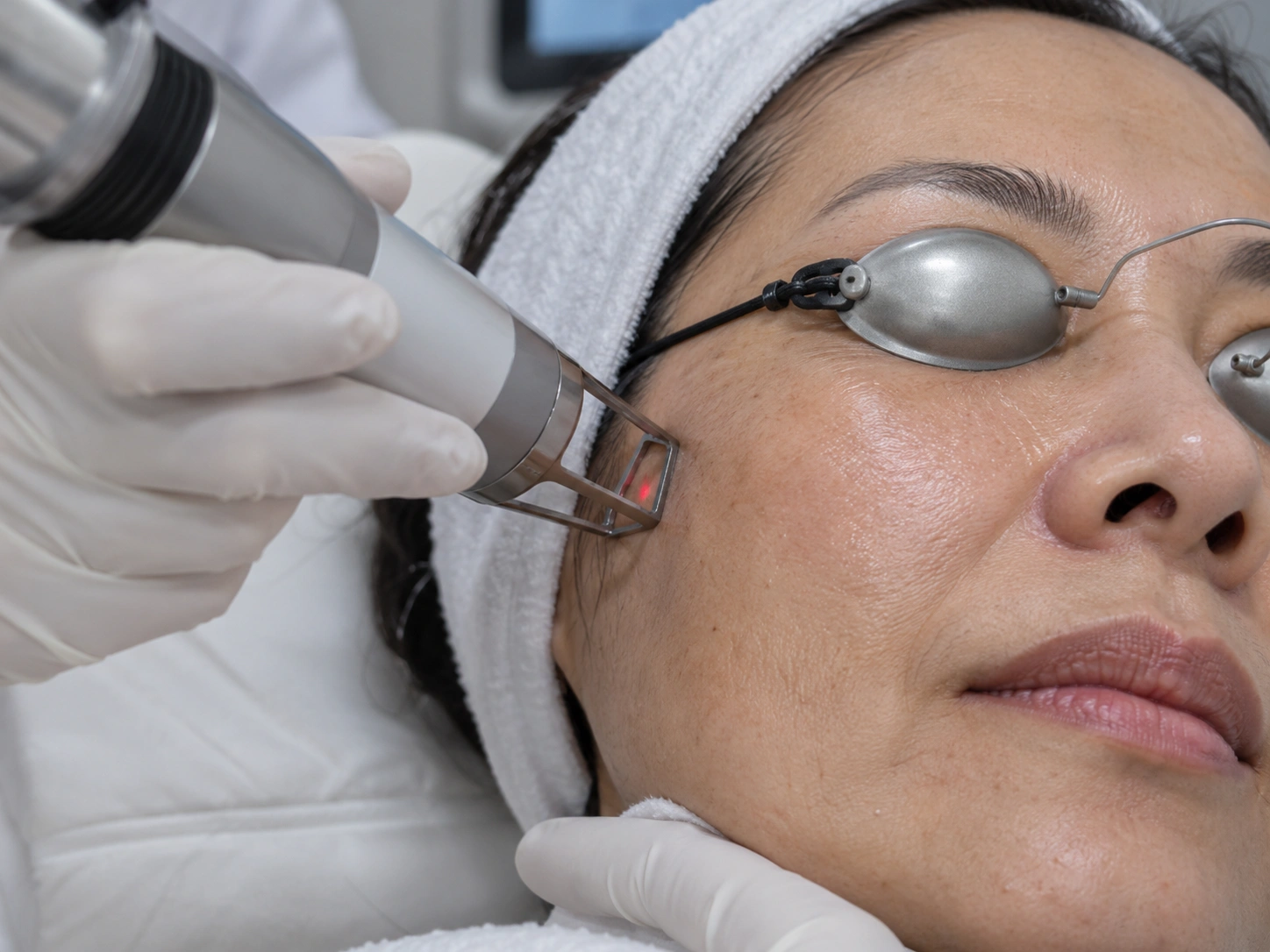
Selected laser treatments may be considered when visible fine lines occur together with changes in skin texture.
Treatment selection should be based on what is causing the concern, your facial anatomy, skin condition and what kind of result you are looking for.
Explore related guides before deciding whether treatment is right for you.
Understand the everyday factors that influence premature skin ageing and what you can do about them.
Read the guide →Compare different skin booster approaches for hydration, texture and overall skin quality.
Explore Skin Boosters →Learn how Plinest and Newest differ and where they may fit within a doctor-led skin treatment plan.
Read the treatment guide →Treatments do not permanently stop the ageing process.
Response depends on the treatment, skin condition, anatomy and individual factors.
The aim does not always have to be a completely line-free face.
There is no fixed age. Genetics, facial movement, sun exposure, skincare and lifestyle can all influence when lines become noticeable.
It depends on the type and depth of the wrinkle. Treatment may soften certain lines, but complete removal is not always realistic or necessary.
Forehead lines are often influenced by facial movement, but the most appropriate treatment should be determined after assessing facial anatomy and the type of line present.
Good sun protection and an appropriate skincare routine can support skin health and help reduce factors associated with premature skin ageing.
Sometimes. One treatment may target facial movement while another addresses skin texture, hydration or laxity. Combination treatment is considered when clinically appropriate.
Start with a consultation. Our doctor can assess your facial movement, skin quality and structure before discussing suitable treatment options.