Dry. Itchy. Sensitive.
When your skin keeps flaring, start by understanding why.
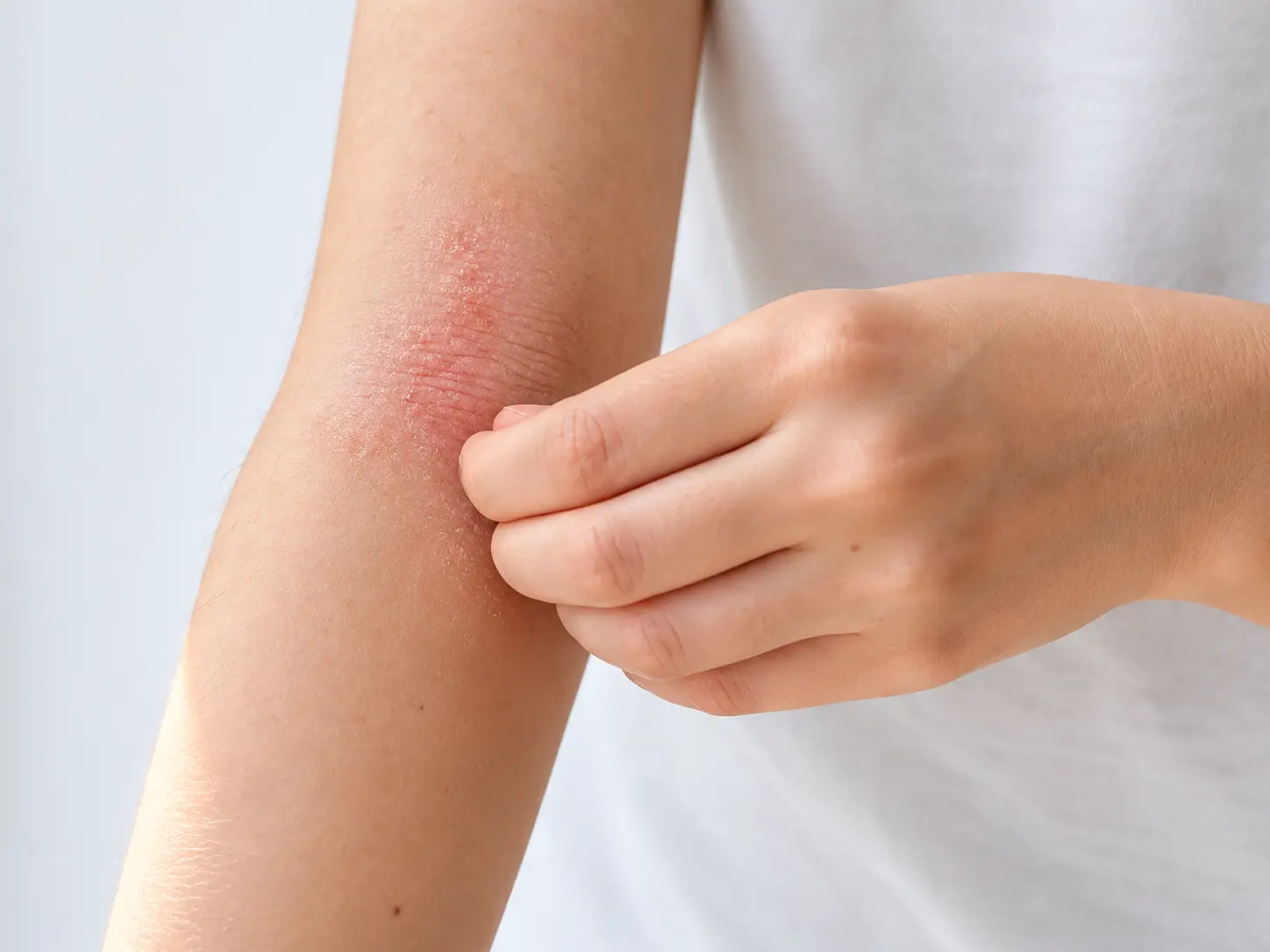
Eczema describes inflammatory skin conditions that can cause dryness, itching, irritation and sensitive skin.
It may settle for a while, then flare again. The location, severity and triggers can be different for everyone.
The appearance may vary, but these are some common experiences.

Skin may feel flaky, tight, cracked or unusually rough.

The urge to scratch can become difficult to ignore.

Skin may become irritated, red, darker or swollen.

Eczema can alternate between calmer periods and flare-ups.
Think of your skin barrier as a protective wall.
It helps keep moisture inside the skin while protecting it from irritants outside.
Skin becomes dry and uncomfortable.
Sensitive skin can react more easily.
Itching and irritation may increase.
Regular moisturising and gentle skin care are commonly included in eczema management. Read more from the American Academy of Dermatology .
There isn't one universal trigger. Different skin reacts differently.
Hot weather can aggravate sensitive skin.
Perspiration may cause irritation during a flare.
Perfumed products may irritate some people.
Strong cleansers may increase dryness.
Some patients notice flares during stressful periods.
Fabrics, products and surroundings vary between individuals.

There isn't one routine that fits every patient. The first step is understanding what your skin is doing.
Review the skin, symptoms, location, duration, previous treatments and possible diagnosis.
Manage active inflammation and discomfort based on individual clinical assessment.
Build a practical skin-barrier routine and reduce avoidable aggravating factors.
Eczema care usually works as a process rather than one isolated step.
Address active inflammation and discomfort where appropriate.
Support dry and sensitive skin with appropriate barrier care.
Identify avoidable factors that appear to aggravate the skin.
Continue sensible skin care even during calmer periods.
Eczema-prone skin is already sensitive. A complicated routine isn't always a better routine.

Especially when eczema begins affecting your comfort, sleep or daily activities.
No. Eczema itself is not contagious and cannot be passed from one person to another through normal contact.
Eczema can behave as a long-term condition with periods when symptoms improve and periods when they flare. Management focuses on controlling symptoms and caring for eczema-prone skin.
Eczema-prone skin can have a disrupted protective barrier and may react to dryness, heat, sweat, irritating products or other individual triggers.
Treatment depends on the diagnosis, location and severity of inflammation. Topical corticosteroids are an established eczema treatment, but medication should be selected and used appropriately.
Yes. Eczema is common in children but can affect people at different ages. Treatment should be appropriate for the patient's age and clinical condition.
Renora Clinic provides doctor-led assessment for skin concerns. Recommendations depend on examination findings and individual clinical suitability. You can contact Renora Clinic here .
Start with a doctor-led skin assessment and understand what your skin may actually need.