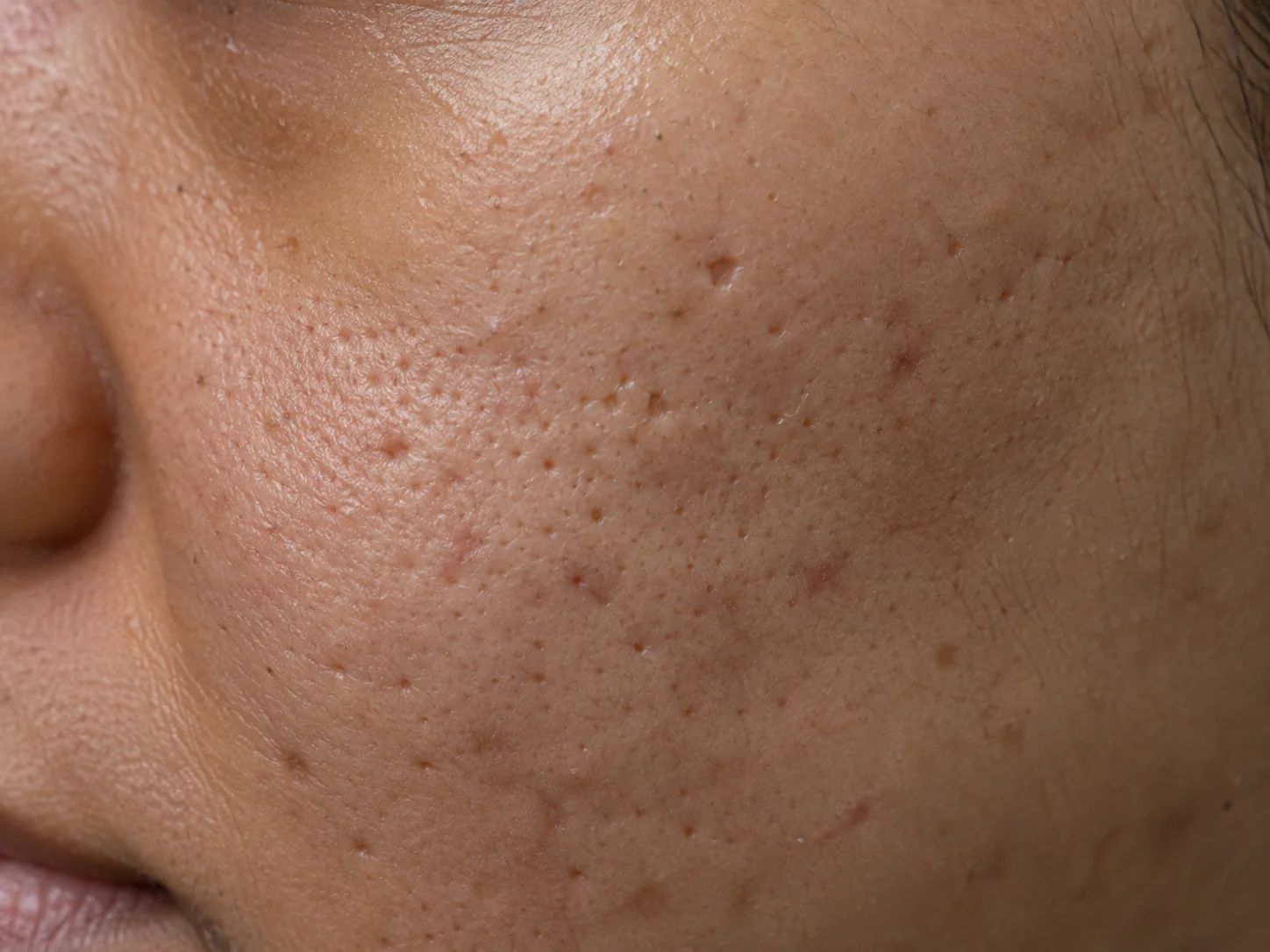
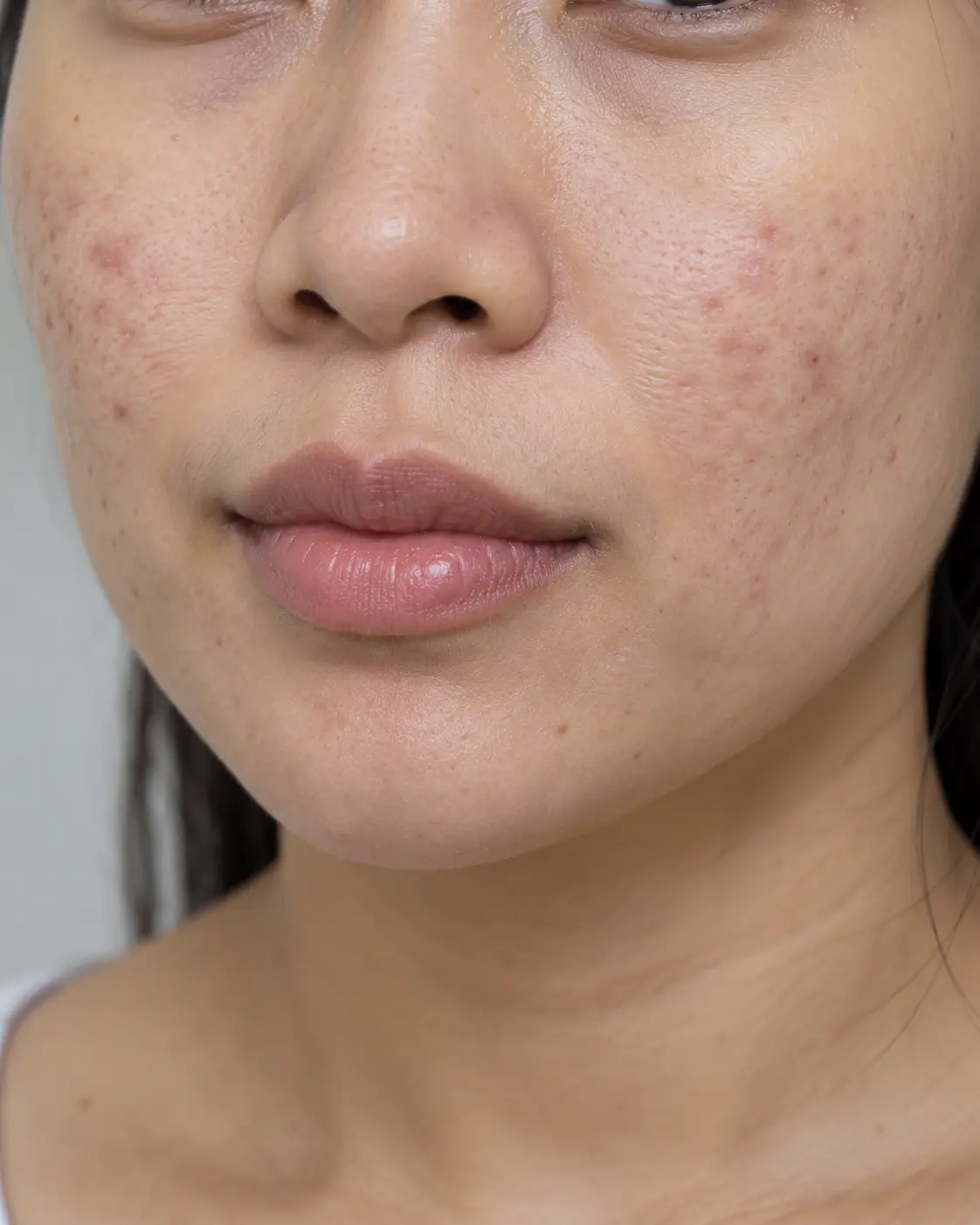
Colour changed.
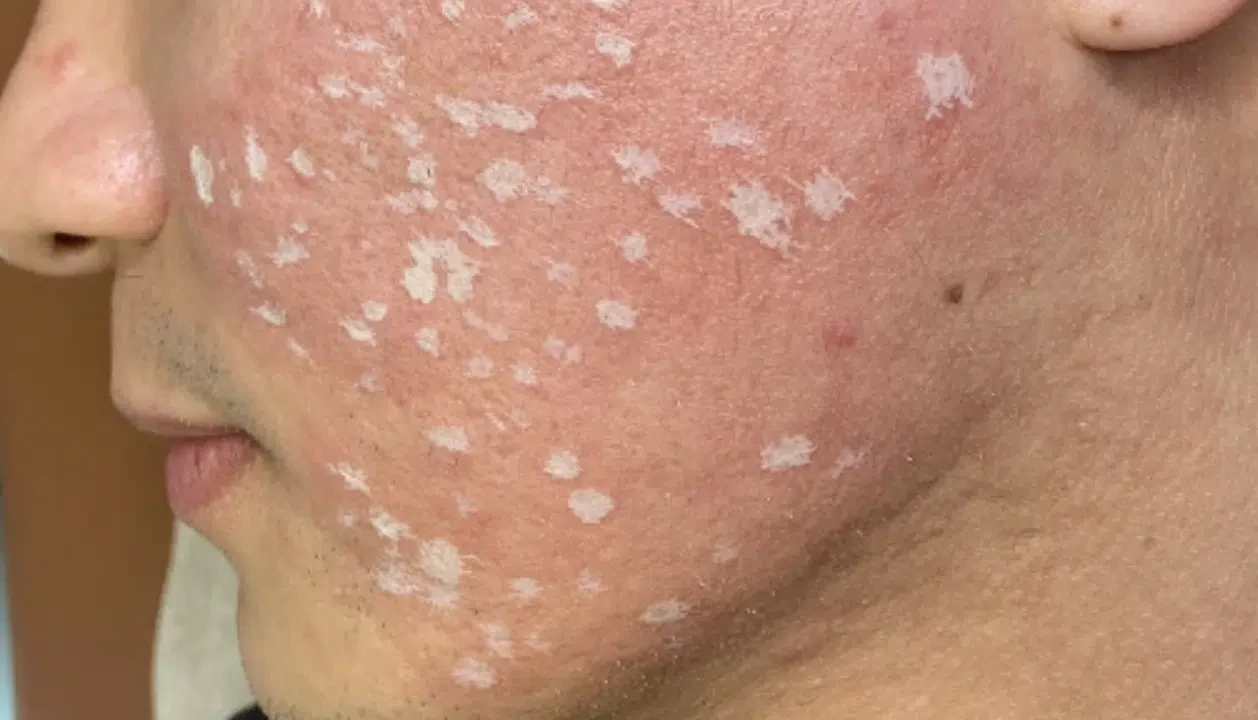
The skin remains relatively flat, but red, brown or darker marks remain after acne.
Acne scars are not all the same. The first step is identifying the scar pattern before choosing treatment.
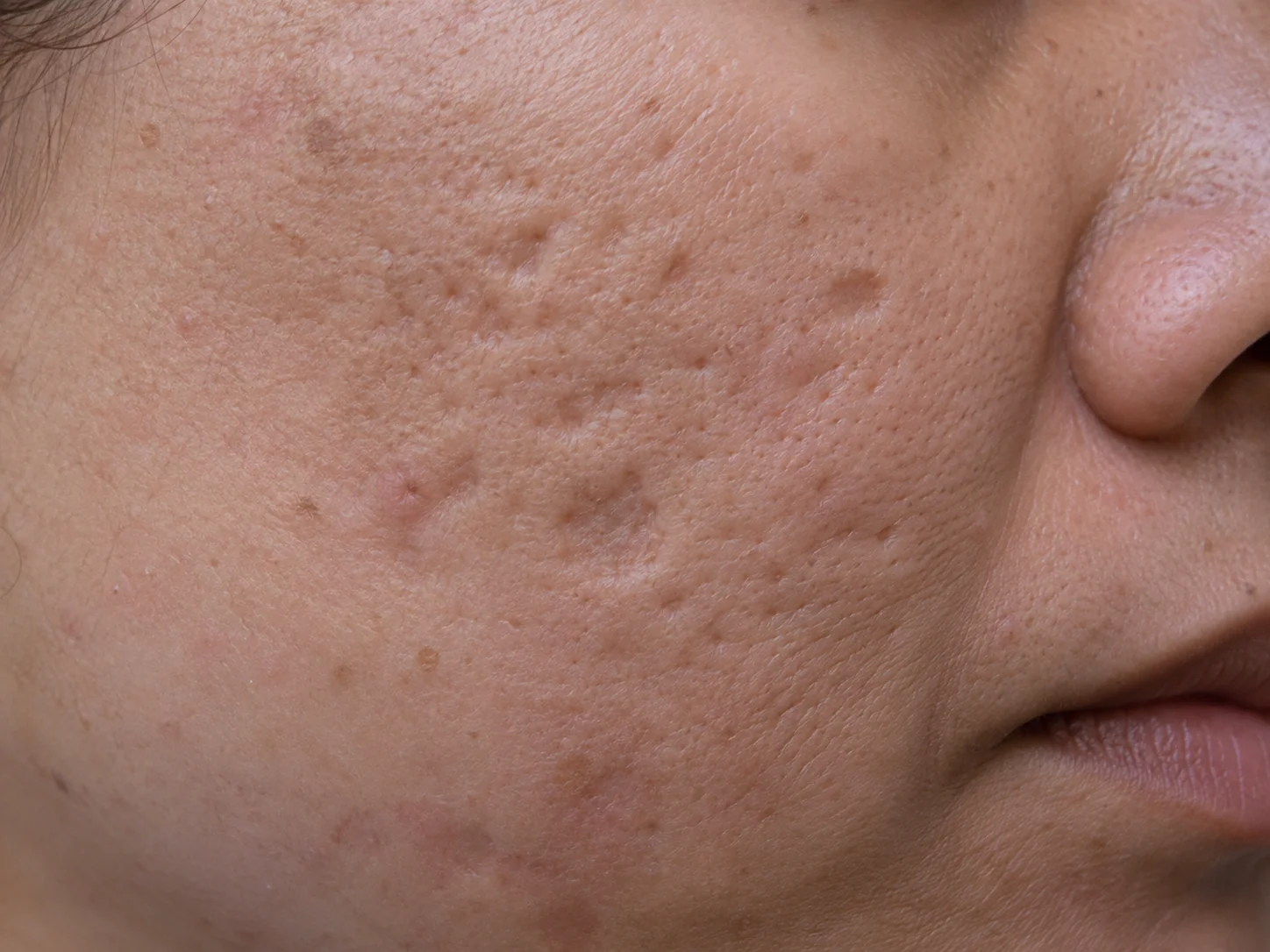
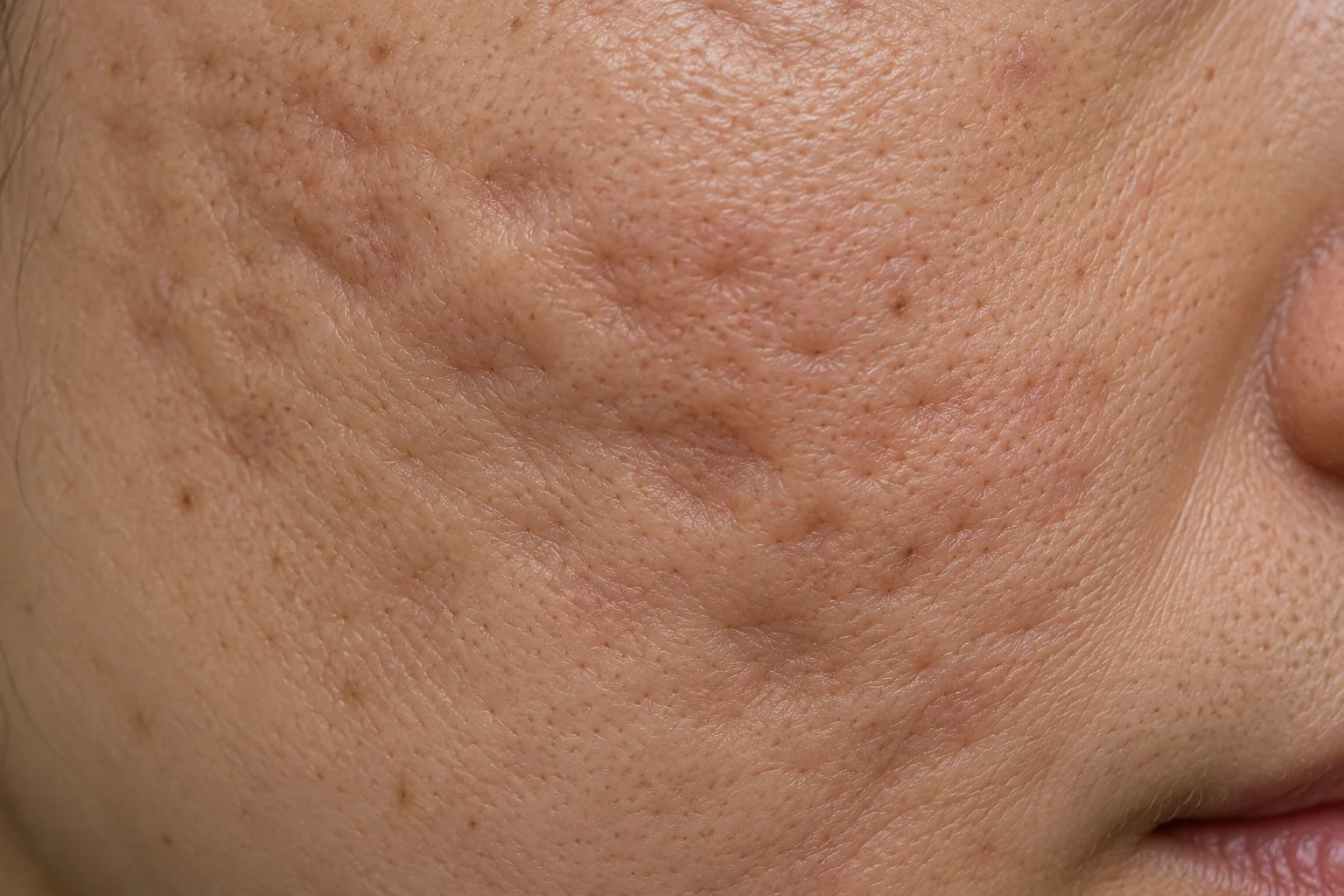
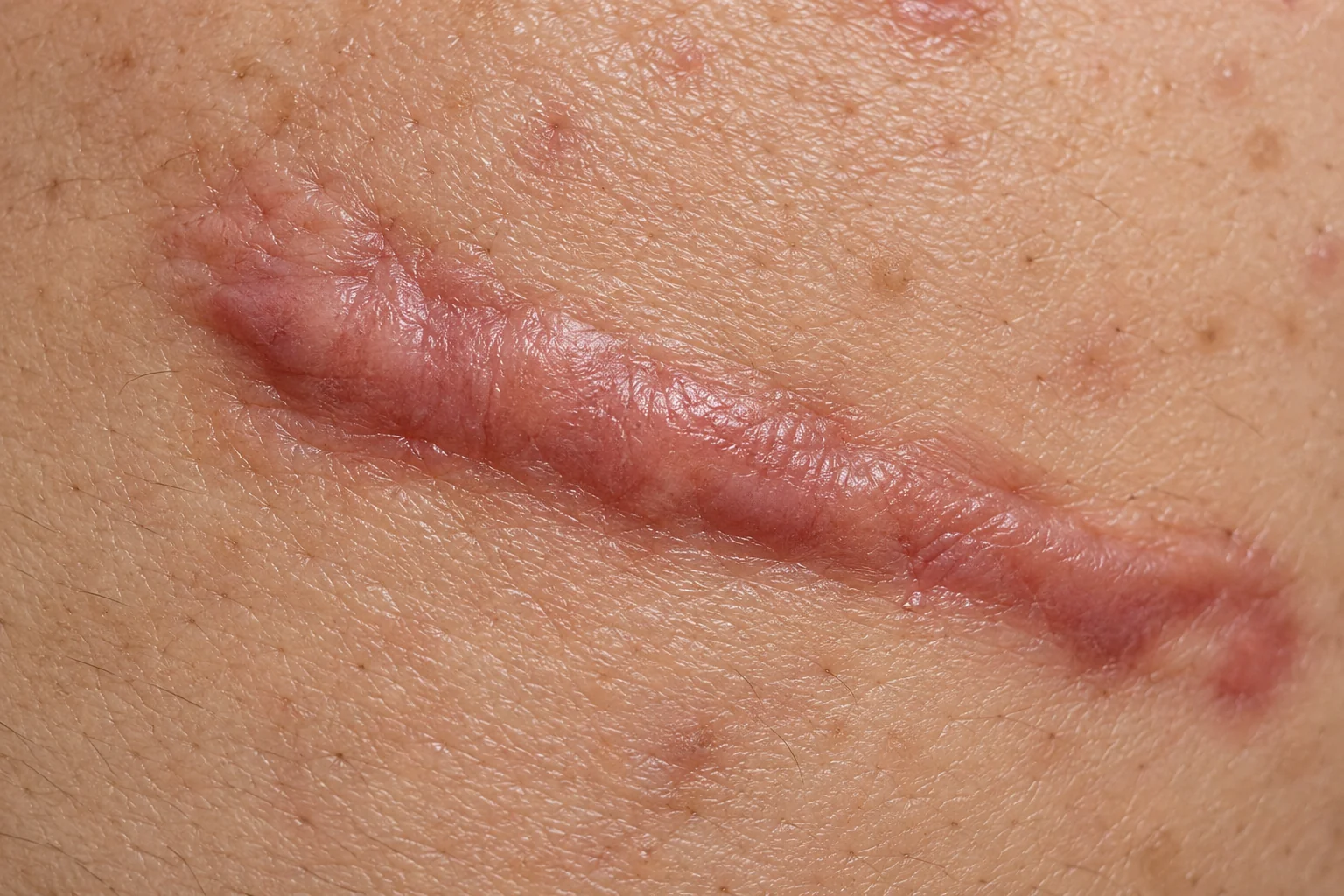
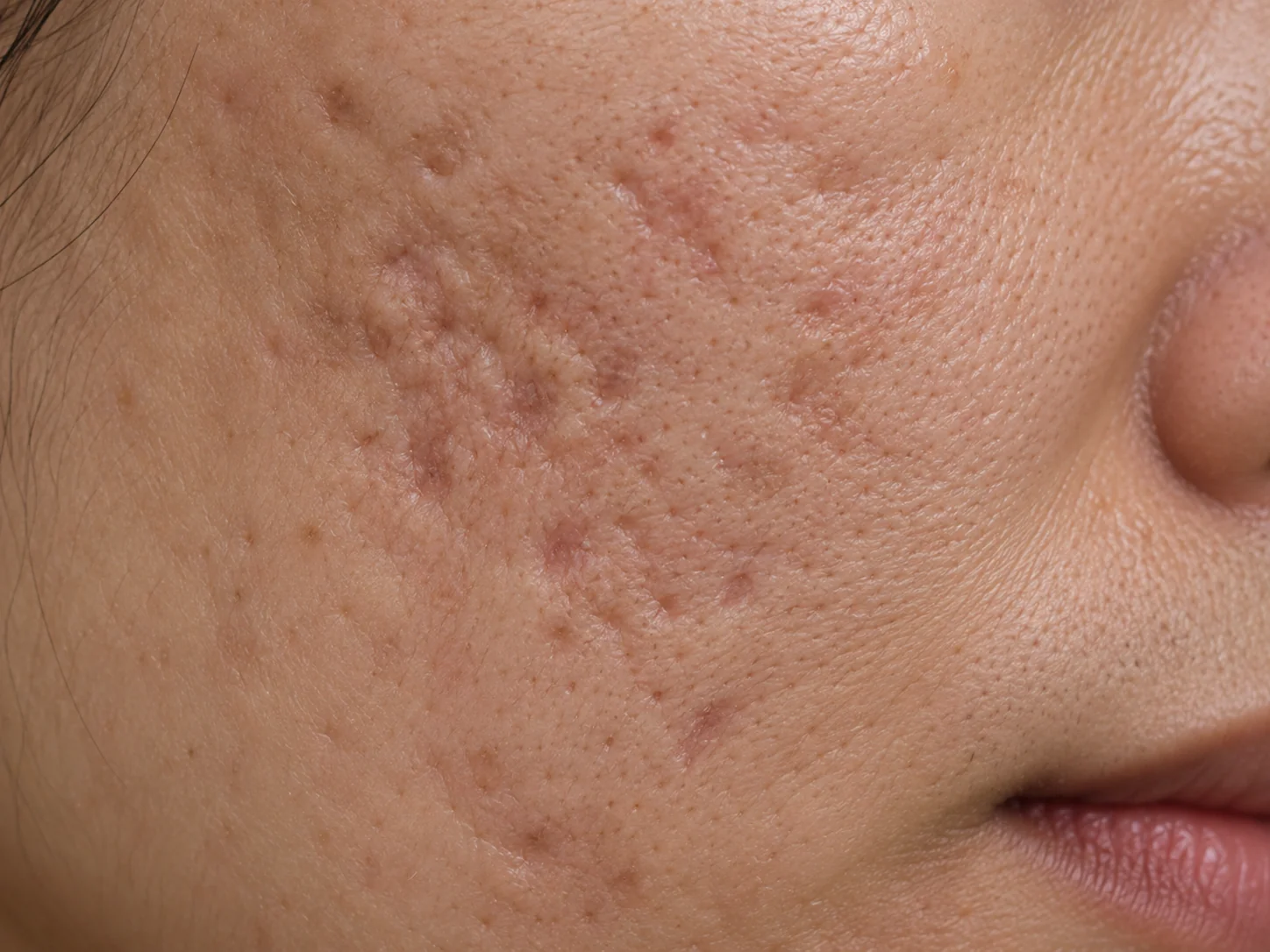
A true acne scar changes the surface or structure of the skin. It may look pitted, indented, uneven or raised.
Look at the skin from the side. Is it flat — or has the texture changed?
The skin remains relatively flat, but red, brown or darker marks remain after acne.
The skin may look indented, pitted, uneven or raised.
The shape and depth of a scar can influence which treatment may be considered.
01
Small openings that extend deeper into the skin.
02
Round or oval depressions with more defined edges.
03
Broad shallow depressions that can make the skin look wavy.
04
Firm scars that sit above the surrounding skin.
The doctor looks at the pattern, depth and surrounding skin before planning treatment.
Ice pick, boxcar, rolling or raised — and how deep each scar appears.
Some scars move differently because deeper tissue may be pulling on the skin.
Active acne, pigmentation and skin sensitivity also affect the treatment plan.
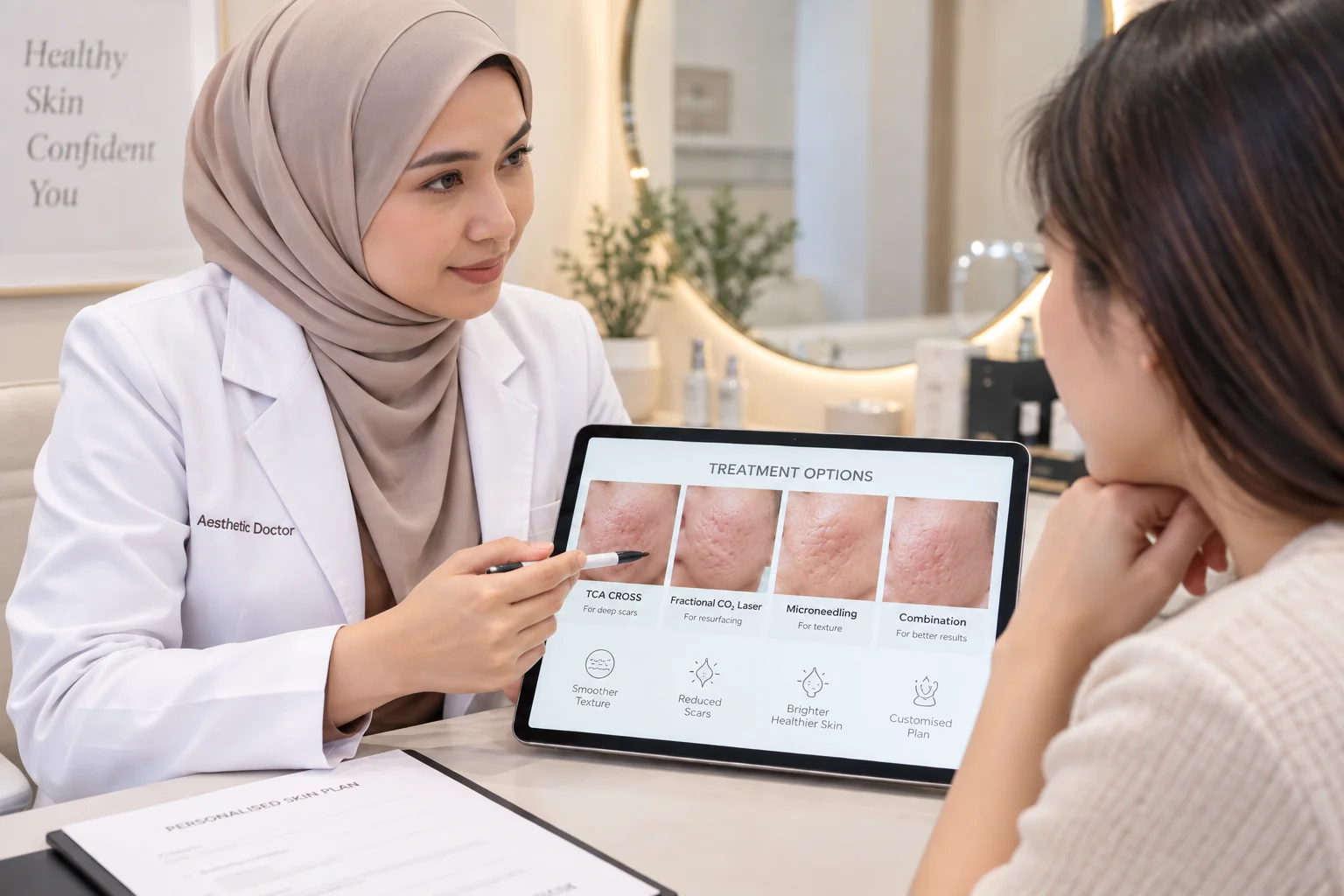
Your doctor may recommend one treatment or a staged combination according to your scars.
TCA is carefully applied into selected individual scars to encourage local skin remodelling.
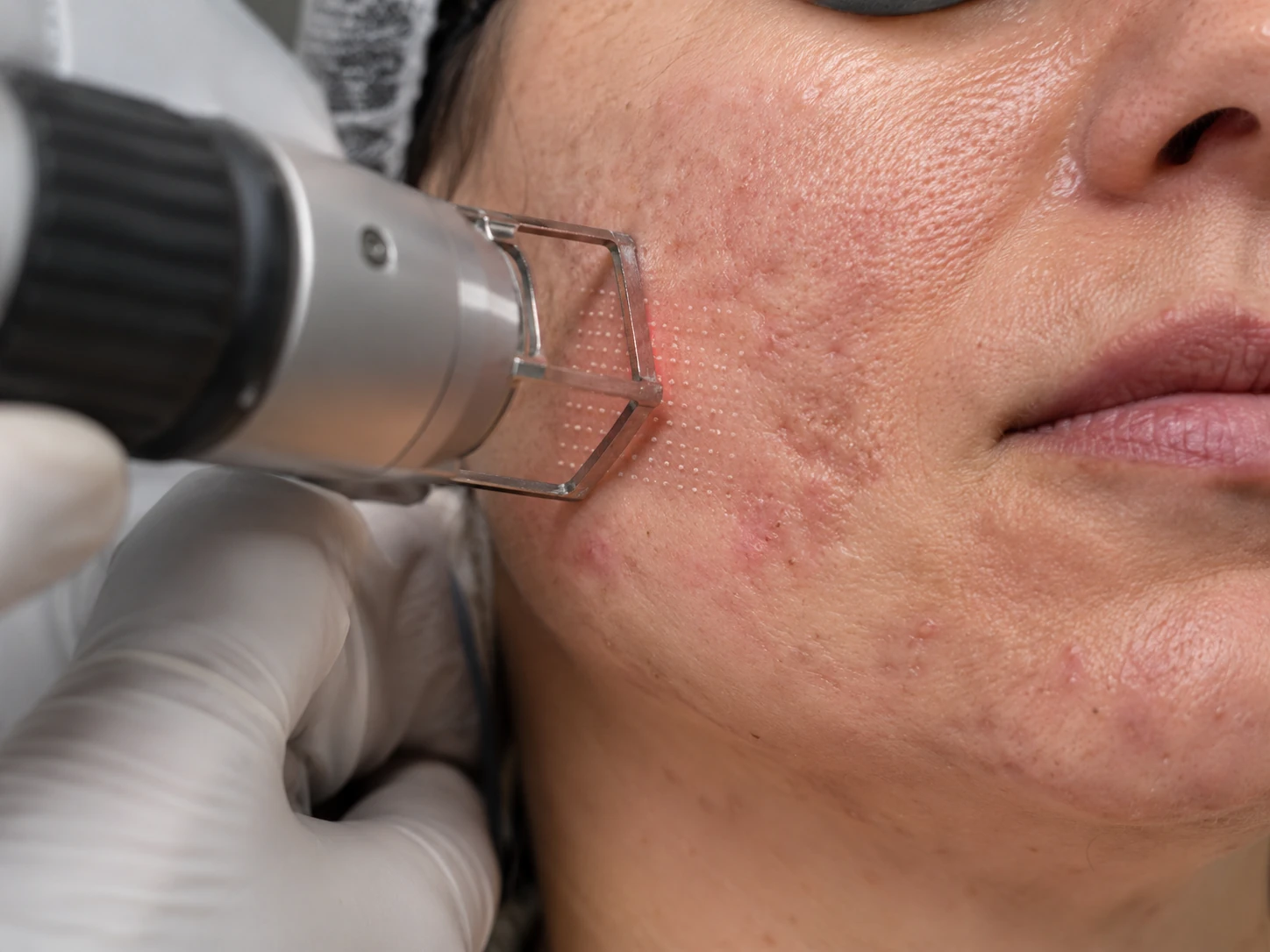
Fractional resurfacing creates controlled treatment zones to support skin remodelling and improve uneven texture.
One face may contain several scar types. A staged approach may therefore be considered.
Scar depth, skin tone, active acne, downtime and previous treatments also matter. The final treatment plan should follow a medical assessment.
Acne scar treatment is usually better planned as a process rather than a single procedure.
New breakouts may create new scars.
Identify which scars are deep, shallow, tethered or raised.
Match the procedure to the scar pattern and your skin.
Reassess the skin before deciding the next step.
Acne scar treatment aims to make scars less noticeable and improve the overall appearance of skin texture.
The goal depends on the scar pattern and selected treatment.
Acne scars cannot always be completely removed. Results and recovery vary between patients.
Your treatment plan starts with your skin, not with a machine.
Your scars and current skin condition are assessed first.
Different scar patterns can require different approaches.
Treatment can be planned in stages when appropriate.
Progress is reviewed before planning the next step.
If new pimples are still appearing, controlling acne may be the priority before scar procedures.
Acne scar treatments are generally intended to reduce the appearance of scars rather than guarantee complete removal. Results depend on the scar type, severity, skin and treatment used.
There is no single treatment that is best for every scar. Ice-pick, boxcar, rolling and raised scars may require different approaches.
Yes. It is common for different scar patterns to appear on the same face. This is one reason a combination treatment plan may sometimes be considered.
The number of sessions varies according to scar type, severity, treatment choice and how your skin responds. Your doctor can discuss this after assessment.
If active acne is still producing new breakouts, controlling the acne is usually an important priority so that additional scars do not continue to form.
Downtime varies depending on the treatment. Redness, swelling, crusting or temporary pigment changes may occur with certain procedures.
Ice pick, boxcar, rolling or a mixture — start with an acne scar assessment.