
Cytosial
Filler.
A closer look at the French hyaluronic acid filler range, how dermal fillers work and why the final result depends on much more than the syringe itself.
If you are researching Cytosial filler in Malaysia, the product name is only one part of the decision. Facial anatomy, treatment depth, product selection and treatment planning all influence the final outcome.
What exactly is Cytosial filler?
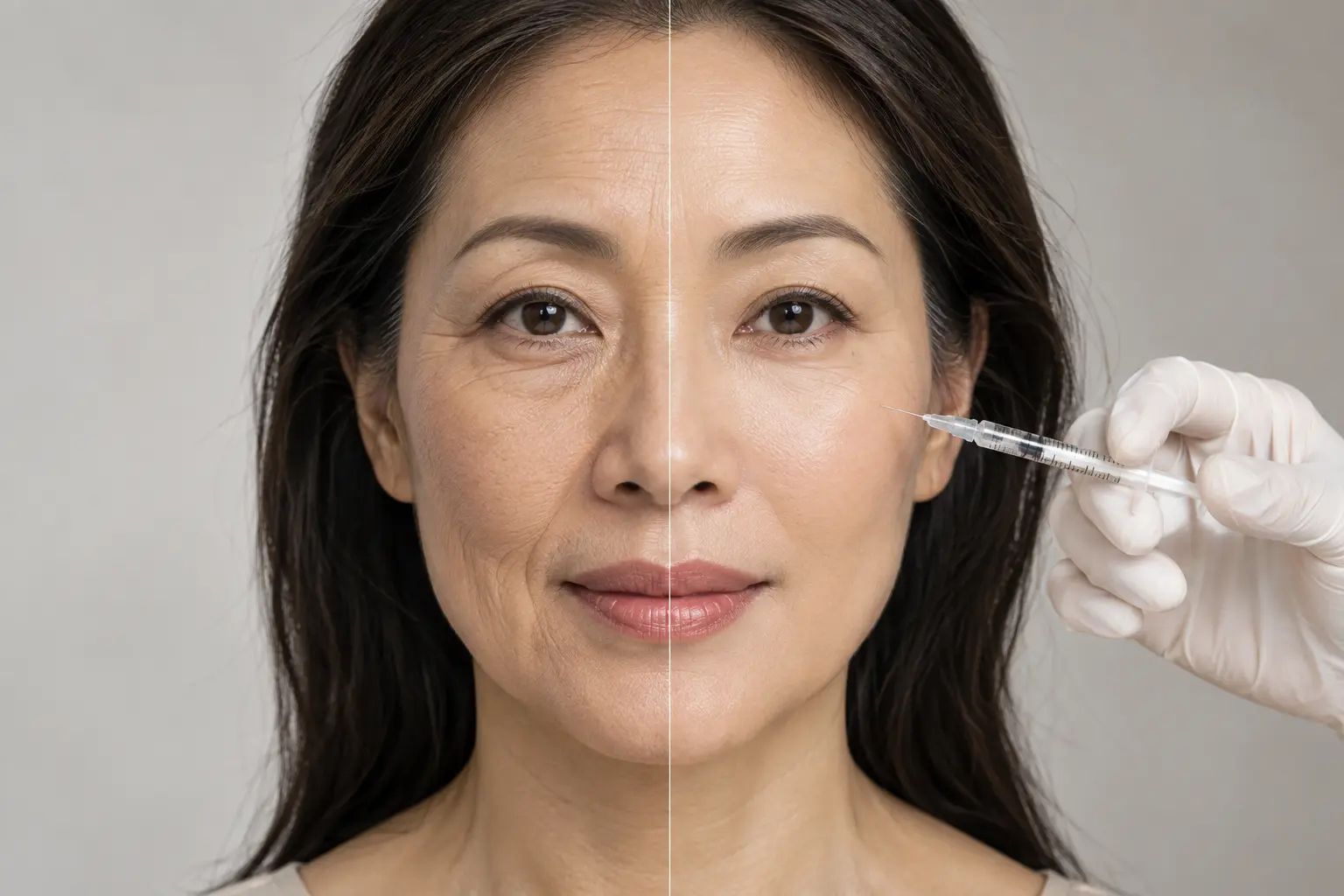
Cytosial is a family of injectable dermal fillers based on hyaluronic acid, developed by French medical-device company Bioxis Pharmaceuticals.
Hyaluronic acid, or HA, is a naturally occurring molecule found in tissues throughout the body.
In dermal fillers, HA is formulated into a gel that can be placed at selected tissue depths to provide volume, structural support or correction.
Cytosial uses what Bioxis describes as a monophasic hyaluronic acid matrix.
Rather than thinking of filler simply as something that makes an area “bigger”, it is more useful to think of it as a material that can be strategically placed to influence facial structure, contours and selected depressions.
Cytosial filler is an injectable hyaluronic acid gel with different formulations created for different tissue depths and structural requirements.
It is not simply about
adding volume.
A carefully planned hyaluronic acid filler treatment considers three things together: what has changed, where support is needed, and how the filler should interact with surrounding tissue.
Volume
Filler can occupy space in selected areas where additional volume or structural support is clinically appropriate.
Shape
Strategic placement may influence contours, transitions and the visual balance between different areas of the face.
Surface
Selected fillers can also be used to address certain depressions or folds when the anatomy is suitable.
This illustration is educational and simplified. Actual treatment depth depends on anatomy, product indication and the treating doctor's clinical assessment.
One name.
Different gel profiles.
The Cytosial family includes formulations created for different treatment depths and structural requirements.
Product selection should be based on anatomy, treatment objective and appropriate injection plane rather than choosing a syringe based on the name alone.
Cytosial Medium
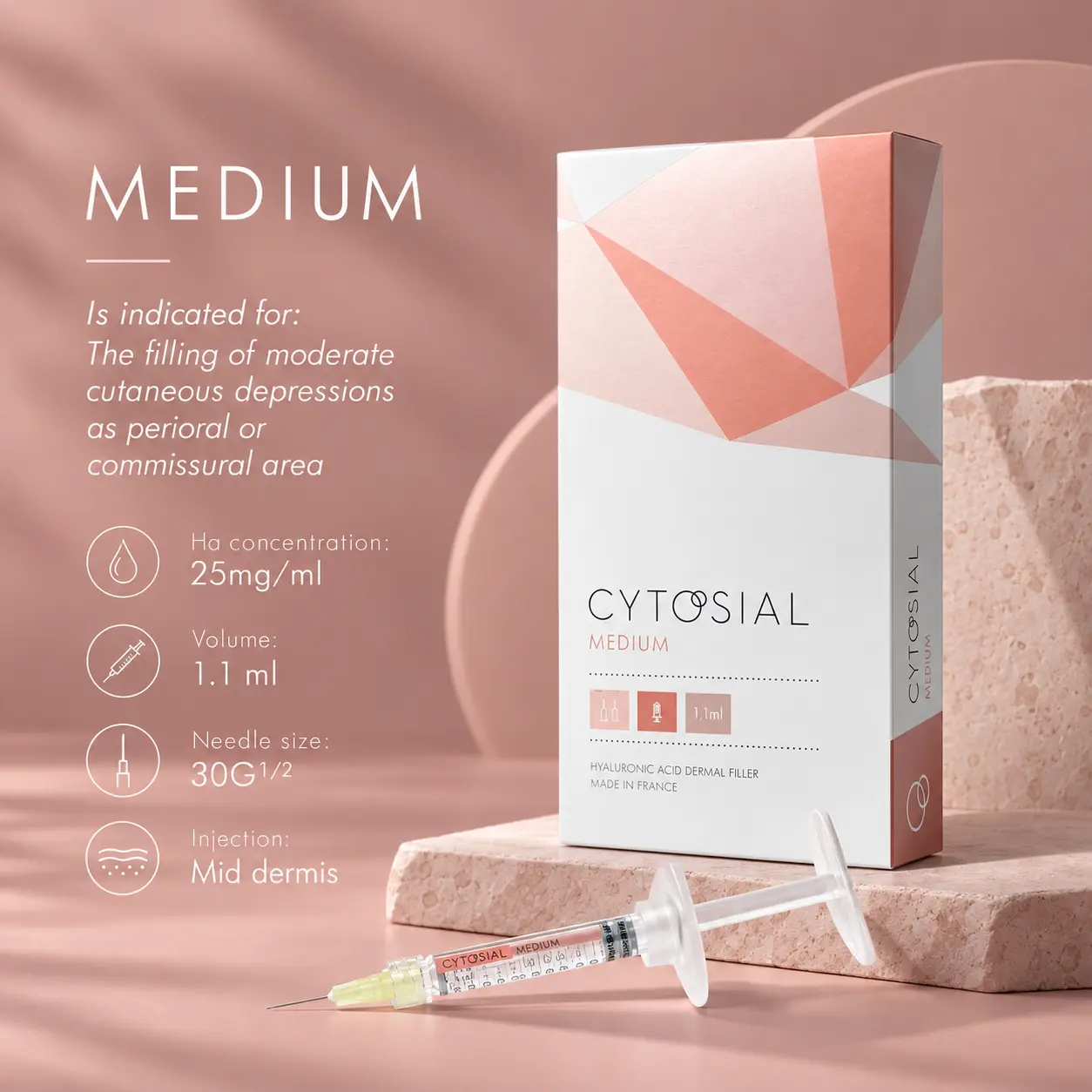
Cytosial Medium represents the more superficial end of the Cytosial range.
It may be selected when the treatment objective requires placement within a more superficial tissue plane.
Cytosial Deep Wrinkles
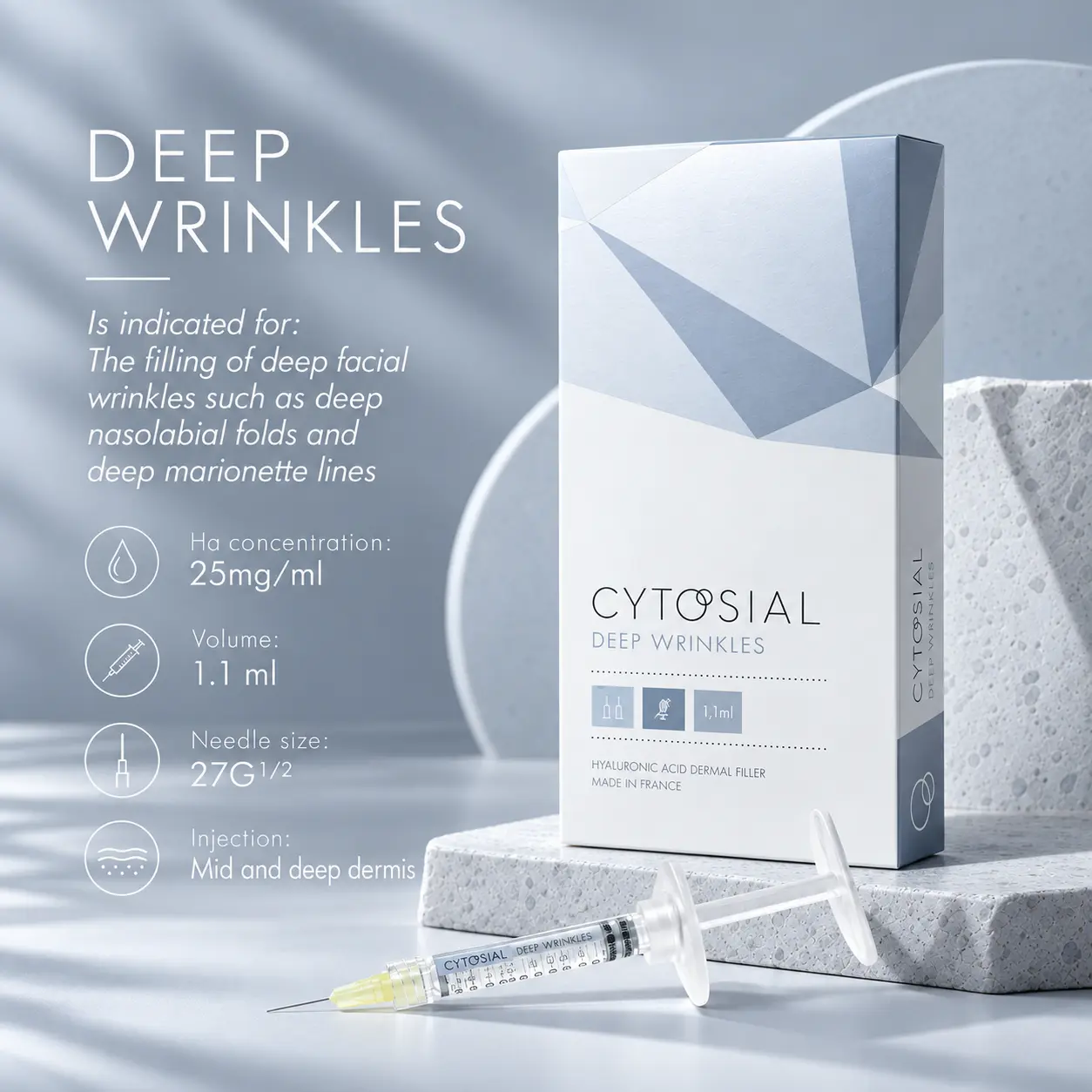
Cytosial Deep Wrinkles is intended for deeper placement than Cytosial Medium.
It may be considered when the treatment objective requires deeper structural correction.
Cytosial Volume
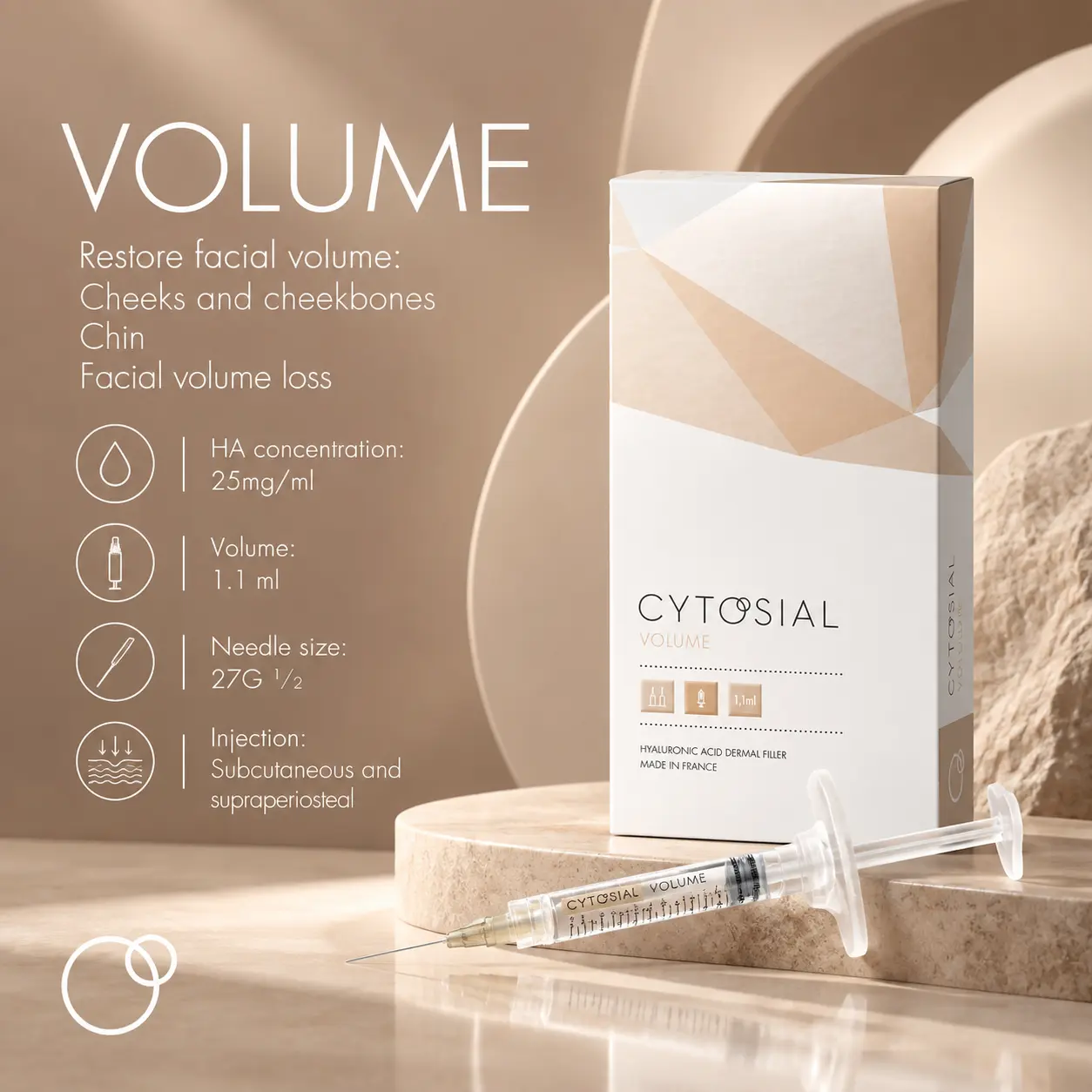
Cytosial Volume sits at the deeper structural end of the Cytosial range.
Deeper filler formulations can be used when the treatment objective involves structural support or restoration of selected volume deficits.
Start with the face.
Not the syringe.
Good filler planning starts by identifying what is actually creating the concern.
A fold, shadow or change in facial shape can have several contributing factors. That means the same visible concern may require a different approach from one person to another.
Volume change
Changes in facial fat compartments and underlying support can alter how different areas of the face transition.
Facial proportions
A treatment plan should consider the relationship between neighbouring facial features rather than treating one point in isolation.
Skin laxity
Loose skin is different from volume loss. In some patients, a tightening treatment may be more relevant than adding additional filler.
Dynamic movement
Facial expressions influence folds and contours, so the face should be assessed both at rest and during movement.

The same filler can look very different in different faces.
The goal is to work with your existing facial structure rather than simply copying someone else's proportions.
Treatment planning can include evaluation of:
What happens during
a filler appointment?
Consultation
Your doctor reviews the concern, facial anatomy, medical history and treatment expectations.
Treatment planning
The appropriate product, treatment area, volume and placement strategy are determined.
Preparation
The treatment area is prepared using appropriate clinical and aseptic technique.
Injection
Filler is placed using an injection technique selected according to anatomy, treatment objective and product.
Review
Initial changes may be visible immediately, although early swelling means the appearance directly after treatment is not necessarily the final appearance.
What should you expect afterwards?
Dermal filler creates a physical change immediately, but the treated area may also temporarily swell after injection.
Mild swelling, tenderness, redness or bruising may occur. Early post-treatment appearance should therefore be interpreted together with the expected settling period.
Natural-looking filler is about proportion.
More filler does not automatically create a better result. The amount used should serve the treatment plan.
Subtle treatment often comes from understanding where filler will provide useful support and where extra volume would add little benefit.
A doctor may recommend a smaller amount, another formulation, treatment over more than one session, or a different treatment modality when filler does not address the main concern.
For example, visible skin laxity may sometimes be more suited to tightening treatment, while skin texture or hydration concerns may require a skin-quality treatment instead.
Dermal filler is a
medical procedure.
Injectable filler should be approached differently from an ordinary beauty treatment because injections take place around important facial blood vessels and anatomical structures.
Expected temporary effects
Swelling, redness, tenderness, discomfort and bruising may occur following dermal filler injections.
Possible complications
Infection, inflammatory reactions, lumps, nodules, asymmetry and other delayed reactions can occur.
Accidental placement of filler into a blood vessel can compromise blood supply to tissue. Unusual severe pain, sudden visual changes or skin that becomes unusually pale, grey or blue during or after treatment require urgent medical assessment.
Cytosial is listed in the Malaysian Medical Device Authority register as a hyaluronic acid injectable dermal filler family. Treatment remains subject to product indication, professional assessment and applicable Malaysian regulations.
How should you choose a dermal filler?
A filler brand cannot be separated from the person being treated, the formulation selected and the way the product is placed.
Different hyaluronic acid fillers have different properties, firmness, cohesivity, tissue behaviour and intended uses.
Even products within the same brand can behave differently.
A more useful question than choosing by brand alone is:
“What are we trying to improve, and which type of filler is most appropriate for that goal?”
Thinking about facial filler? Start with a facial assessment.
Tell us what you would like to improve. A Renora Clinic doctor can assess your facial structure and discuss whether dermal filler, another aesthetic treatment or a combination approach is suitable.
Cytosial filler FAQ.
What is Cytosial filler made from?
Cytosial is a hyaluronic acid-based dermal filler range manufactured by Bioxis Pharmaceuticals in France.
Is Cytosial filler registered in Malaysia?
Cytosial appears in the Malaysian Medical Device Authority register as a hyaluronic acid-based injectable dermal filler family.
How long does Cytosial filler last?
Filler longevity varies according to formulation, treatment area, amount placed, tissue characteristics, facial movement and individual metabolism.
Can Cytosial filler look natural?
The appearance of dermal filler depends on facial anatomy, product selection, treatment volume and placement technique. Conservative planning can focus on maintaining facial proportions.
Is Cytosial the same as a skin booster?
Cytosial is a dermal filler range. Dermal fillers are generally selected for structural correction or volume-related treatment objectives, while skin boosters focus more on skin-quality goals.
Is dermal filler permanent?
Hyaluronic acid fillers are temporary because the material is gradually broken down over time. Duration varies between products, treatment areas and individuals.
Can hyaluronic acid filler be dissolved?
In appropriate clinical situations, hyaluronidase may be used by a doctor to break down hyaluronic acid filler. This requires medical assessment.
Does Cytosial filler have downtime?
Temporary swelling, tenderness, redness or bruising may occur after filler injections. Recovery varies between individuals.
How do I know which Cytosial formulation I need?
You do not need to choose the formulation yourself. Product selection should be based on your anatomy, treatment objective, appropriate tissue depth and your doctor's clinical assessment.
Medical references: Product information is based on Bioxis Pharmaceuticals and the Malaysian Medical Device Authority. General dermal filler safety information is referenced from the U.S. Food and Drug Administration.
Bioxis Pharmaceuticals · Malaysia Medical Device Authority · FDA Dermal Filler Safety
This article is for educational purposes and does not constitute medical advice. Treatment recommendations, product selection and suitability require consultation and assessment by a qualified medical practitioner. Results and recovery vary between individuals.