
A firmer face is not simply about pulling the skin tighter.
Tightan HIFU treatment uses focused ultrasound energy at selected tissue depths to address facial laxity, loss of definition and early jowling—without surgically repositioning the face.

We look specifically at the cheeks, lower face, jowls, jawline and selected facial areas.
What is Tightan HIFU treatment?
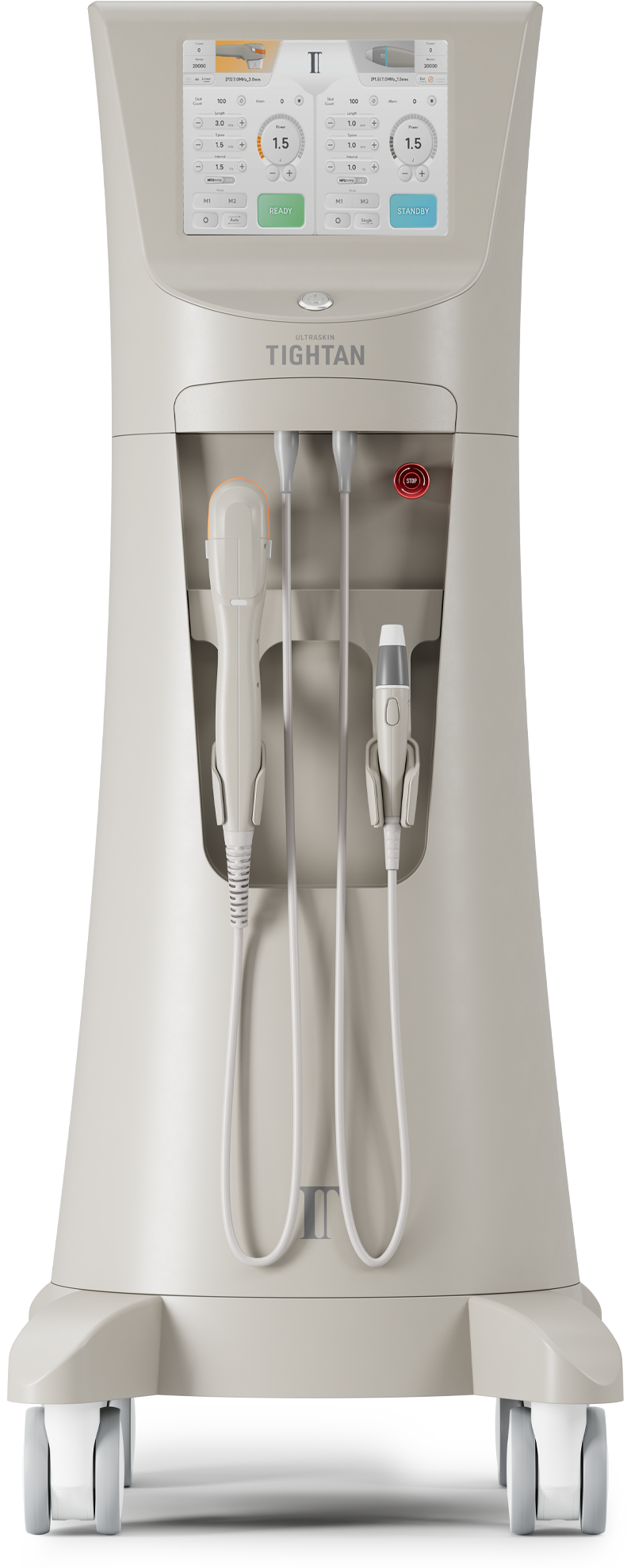
Tightan is a High-Intensity Focused Ultrasound, or HIFU, platform developed by Korean medical-device manufacturer WONTECH. Instead of primarily heating the visible skin surface, focused ultrasound concentrates energy at selected depths beneath it.
In aesthetic treatment, focused ultrasound can create controlled thermal treatment zones within targeted tissue. The biological response that follows can involve collagen contraction and gradual remodelling during the healing process.
This is why HIFU is better understood as a gradual facial-tightening treatment rather than an instant surgical-style facelift.
Published clinical evidence for focused and microfocused ultrasound is strongest as a treatment category rather than for every individual commercial HIFU machine.
 Brow area
Cheek
Lower face
Jawline & jowl
Under-chin
Editorial photograph · Pexels
Brow area
Cheek
Lower face
Jawline & jowl
Under-chin
Editorial photograph · Pexels
Where can facial HIFU be considered?
Facial HIFU should follow anatomy rather than simply covering the whole face with an identical pattern.
During assessment, the practitioner considers where laxity is occurring, facial volume, soft-tissue thickness and whether tightening is actually the correct treatment direction.
Cheeks
Loss of tissue firmness may contribute to a softer appearance through the mid and lower cheek. Selected cheek regions may be considered when tightening rather than volume replacement is the treatment objective.
Lower face
Early facial laxity commonly becomes noticeable through the lower third of the face as the transition from cheek to jaw becomes less defined.
Jowls
Mild-to-moderate jowling may be considered for focused tightening when tissue laxity contributes to the concern. More advanced skin excess may require another approach.
Jawline
When laxity contributes to blurring of the mandibular border, selected lower-face treatment may help improve the appearance of facial definition.
Under the chin
The submental region may be considered depending on whether the main issue is laxity, fat distribution or another anatomical factor.
Why does HIFU treatment depth matter?
Different parts of the face have different tissue thicknesses. HIFU cartridges are designed to focus energy at selected nominal depths rather than heating every facial layer equally.
Facial HIFU commonly uses treatment depths around 1.5 mm, 3.0 mm and 4.5 mm, depending on the device and treatment plan.
These numbers describe a treatment reference—not a promise that exactly the same anatomical structure sits at the same depth in every patient and every region of the face.
More superficial treatment reference for selected facial areas.
Mid-depth treatment commonly used within facial HIFU protocols.
Deeper treatment reference used in appropriately selected areas.
What is different about Tightan?
Tightan is a focused-ultrasound platform developed by WONTECH, a Korean manufacturer of energy-based medical aesthetic devices.
It belongs to the same broad technological family as other HIFU systems, but treatment experience and delivery characteristics can differ between platforms.
Rather than viewing Tightan simply as another machine that “lifts the face”, it is more useful to understand how a practitioner can adapt a focused-ultrasound treatment according to the facial area and treatment objective.
At Renora Clinic, Tightan HIFU may be considered as one possible facial-tightening treatment following assessment.
Manufacturer information: WONTECH
HIFU treatment day is only the beginning.
Much of the treatment effect develops gradually as the tissue responds and collagen undergoes remodelling over time.
Focused ultrasound creates controlled treatment zones at selected depths beneath the skin.
The tissue enters its normal healing and remodelling process.
Collagen remodelling and tissue reorganisation may progressively influence firmness.
Facial contour and firmness are better assessed after allowing sufficient time for the biological response.
What kind of facial change may HIFU produce?
HIFU generally makes the most sense when the goal is a gradual improvement in firmness and contour rather than a dramatic change in facial identity.
Concerns HIFU may help address
- Mild-to-moderate facial skin laxity
- Early jowling
- Reduced lower-face definition
- Loss of firmness around the cheek or jawline
- Selected lines associated with skin laxity
What HIFU does not directly replace
- Lost facial volume requiring a volumising strategy
- Significant excess skin requiring surgical repositioning
- Dynamic wrinkles primarily caused by muscle movement
- Pigmentation treatment when colour is the main concern
- A surgical facelift
Published research on microfocused and focused ultrasound suggests that appropriately selected patients may experience improvement in mild-to-moderate facial laxity. Treatment protocols, devices and outcome measurements vary across studies.
Read a systematic review of microfocused ultrasound for facial skin tightening
Who may be considered for facial Tightan HIFU?
It may make sense when…
- There is early or moderate facial laxity.
- You notice developing jowls or a softer jawline.
- You prefer a non-surgical treatment approach.
- Your expectations are gradual and relatively subtle.
- Your anatomy is considered suitable for focused ultrasound.
A different strategy may make more sense when…
- Loss of facial volume is the dominant ageing change.
- The face is already very lean and preservation of soft tissue is especially important.
- There is significant skin excess.
- There is active inflammation, infection or an open wound in the intended area.
- Previous procedures, implants or medical history change the treatment considerations.
Tightan vs Liftera HIFU vs Fotona 4D
These treatments may all appear in conversations about facial tightening, but they are not identical. The useful comparison is energy type, treatment delivery and treatment objective.
Tightan
Tightan HIFU
- Manufacturer
- WONTECH
- Energy
- High-intensity focused ultrasound
- Main treatment direction
- Facial tissue tightening and contour support
- Facial planning
- Treatment can be adapted according to facial region, tissue characteristics and selected depth.
- May be considered when
- Mild-to-moderate laxity, early jowling or reduced facial definition contributes to the concern.
- Key point
- Treatment should be planned according to anatomy rather than simply maximising shot count.
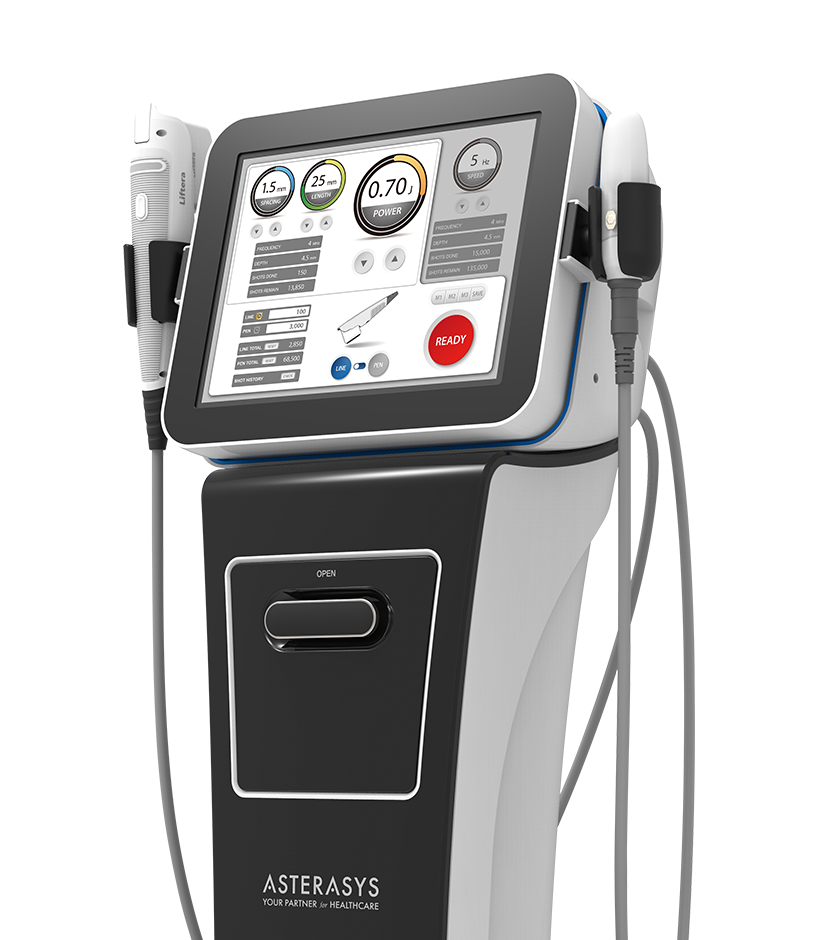 Liftera-A
Liftera HIFU
- Manufacturer
- ASTERASYS
- Energy
- High-intensity focused ultrasound
- Main treatment direction
- Non-surgical facial tightening and contour treatment
- Applicator approach
- Liftera-A incorporates Line and Pen-type applicators, allowing treatment across broader and more curved facial areas.
- May be considered when
- Focused ultrasound is appropriate for the patient's facial laxity and treatment objective.
- Key difference
- Applicator design and treatment-delivery characteristics differ from other HIFU platforms.
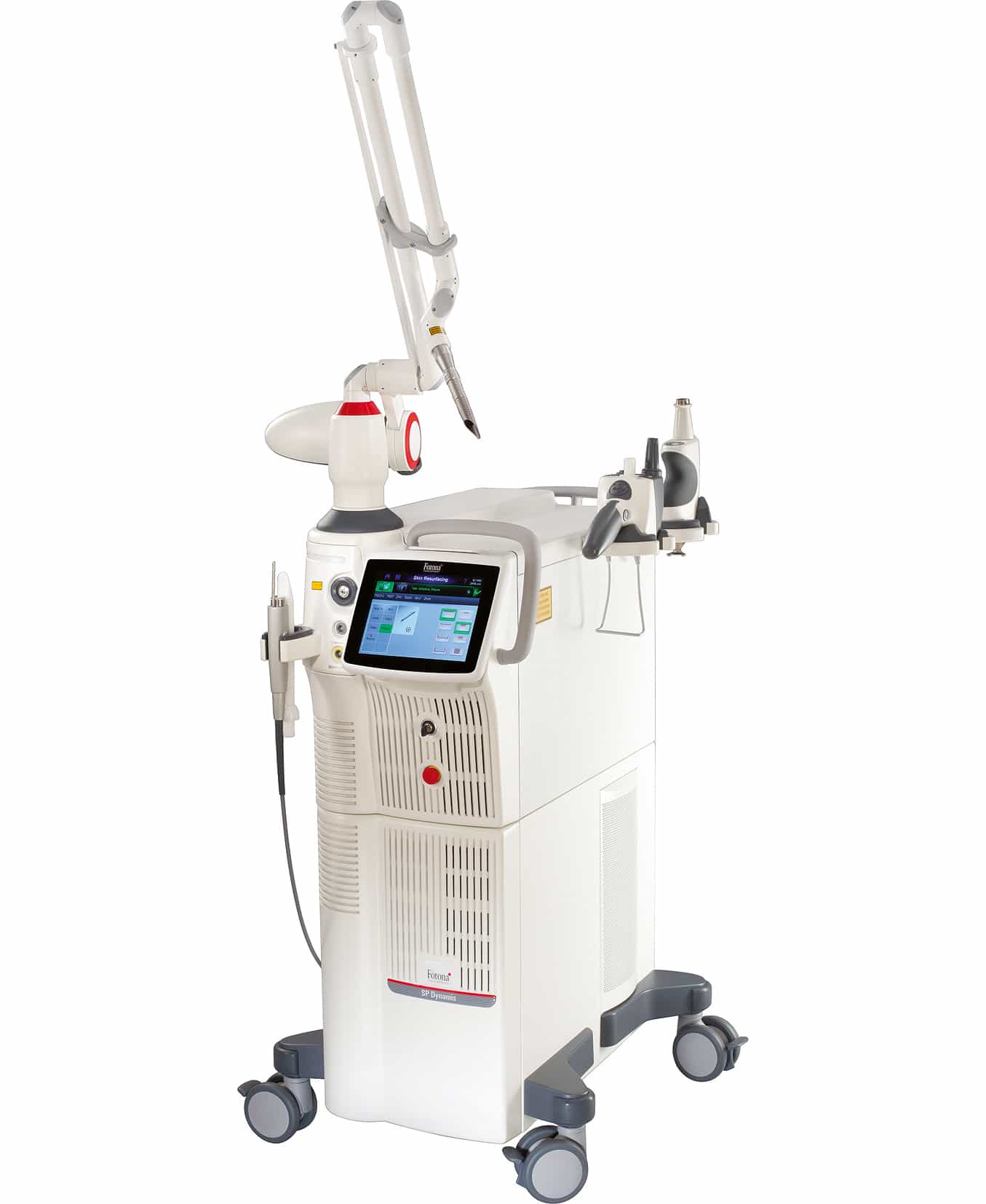 Fotona SP Dynamis
Fotona 4D
- Manufacturer
- Fotona
- Energy
- Er:YAG and Nd:YAG laser wavelengths
- Main treatment direction
- Multi-step facial rejuvenation involving tissue heating, tightening and skin-quality treatment
- Treatment approach
- Fotona 4D combines multiple laser modes rather than delivering HIFU treatment points at predetermined ultrasound depths.
- May be considered when
- The treatment objective involves facial rejuvenation, collagen stimulation and skin quality as well as tightening.
- Key difference
- Fotona 4D is a laser treatment—not HIFU.
What happens during a Tightan HIFU face treatment?
Facial assessment
The practitioner considers facial laxity, volume distribution, asymmetry, soft-tissue characteristics and areas where treatment may or may not be appropriate.
Treatment mapping
Selected facial zones are planned according to anatomy rather than treating every area with an identical pattern.
Ultrasound coupling
Ultrasound gel is applied to allow effective transmission of ultrasound energy from the treatment handpiece.
Treatment at selected depths
Appropriate treatment depths and parameters are selected according to the planned facial area.
Post-treatment review
Temporary warmth, tenderness, redness or mild swelling can occur. Aftercare depends on the individual treatment and clinical assessment.
HIFU is non-surgical. It is not risk-free.
Reported short-term reactions after focused or microfocused ultrasound can include temporary discomfort, redness, swelling, tenderness and altered sensation.
Less common complications have also been described, which is why anatomical knowledge, patient selection and appropriate treatment parameters matter.
Before treatment, tell your practitioner about previous fillers, threads, facial surgery, implanted devices, dental or facial procedures, active skin conditions, medication and relevant medical history.
Medical aesthetic devices should be considered within Malaysia's regulatory framework.
Medical devices used for aesthetic purposes may fall under Malaysia's medical-device regulatory framework. Device registration status is separate from whether a treatment is medically suitable for an individual patient.
Tightan HIFU face treatment FAQ
What is Tightan HIFU mainly used for on the face?
Can Tightan HIFU sharpen the jawline?
Does HIFU make the face smaller?
Will I see results immediately?
Is Tightan HIFU painful?
How much downtime is there after HIFU?
Is Tightan better than Liftera?
Is Tightan HIFU better than Fotona 4D?
Facial ageing involves more than one layer.
If wrinkles are the main concern rather than facial laxity, explore Renora's wrinkle treatment guide . You can also compare Tightan with Liftera HIFU or learn more about Fotona 4D .
Where the information comes from
Does your face need tightening, volume—or something different?
Facial ageing is not one-dimensional. An individual consultation can help determine whether the concern comes mainly from skin laxity, facial volume, fat distribution or another anatomical change before deciding whether Tightan HIFU is an appropriate treatment option.
Book a Consultation